Scroll to Explore

Monday September 7, 2026
Kitesurfing articles
Kitesurfing in Kalpitiya for Beginners: What Your First Days Really Look Like
Watching experienced kitesurfers makes the sport look deceptively simple. Kite in the air, board on your feet, and off you go. Your first lesson looks rather different.
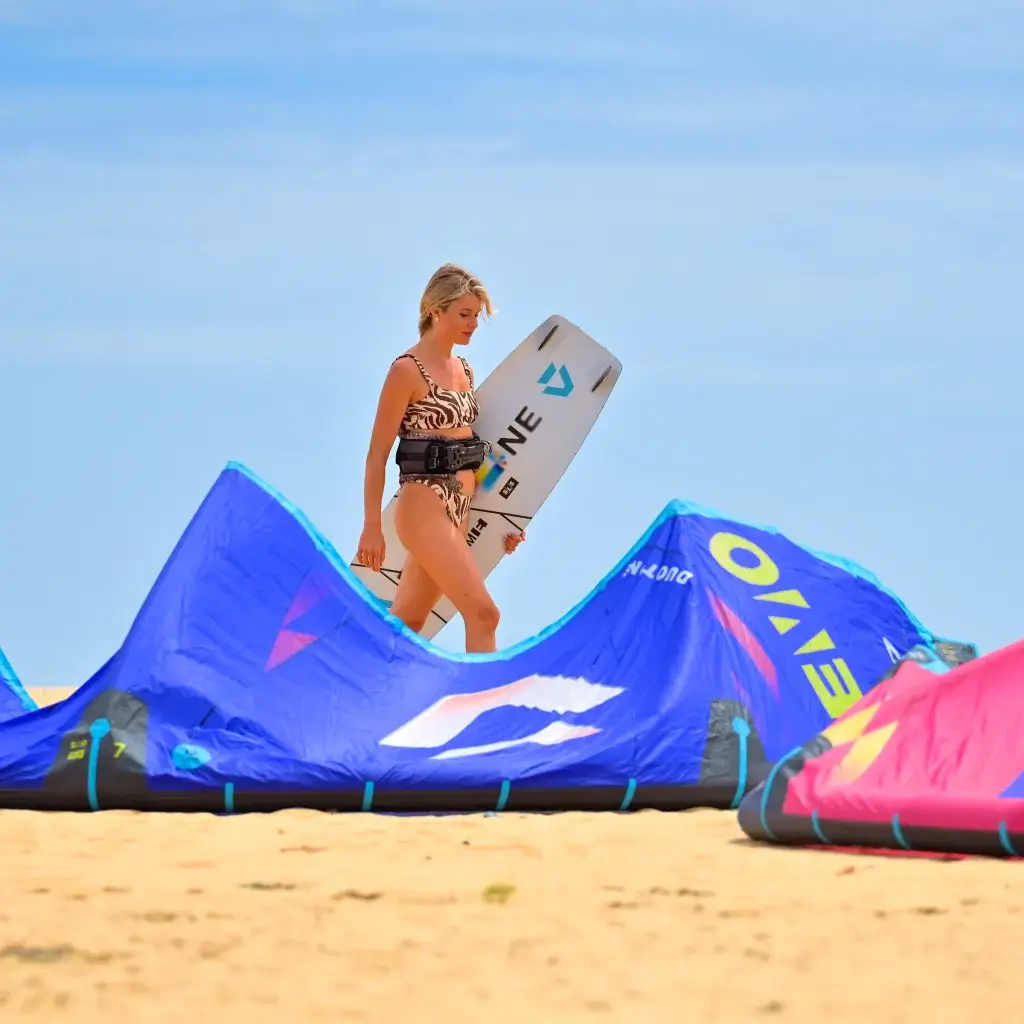
Before you ride anywhere, there is a kite to understand, wind to read and a few important safety systems to learn. Then comes body dragging, the board, the first water starts – and probably a few crashes along the way. If you are thinking about learning to kitesurf in Sri Lanka, here is what your first few days in Kalpitiya actually look like.
Do I need any experience before my first kitesurfing lesson?
No. You can arrive having never touched a kite before. You also don’t need experience in surfing, wakeboarding or other board sports. They can help with certain parts of the learning process, but kitesurfing has its own set of skills and the first priority is learning how to control the kite safely.
At KSL, beginner lessons follow the IKO progression system. The skills build on each other until you can control the kite, move safely through the water and eventually ride independently.
Where do beginners learn in Kalpitiya?
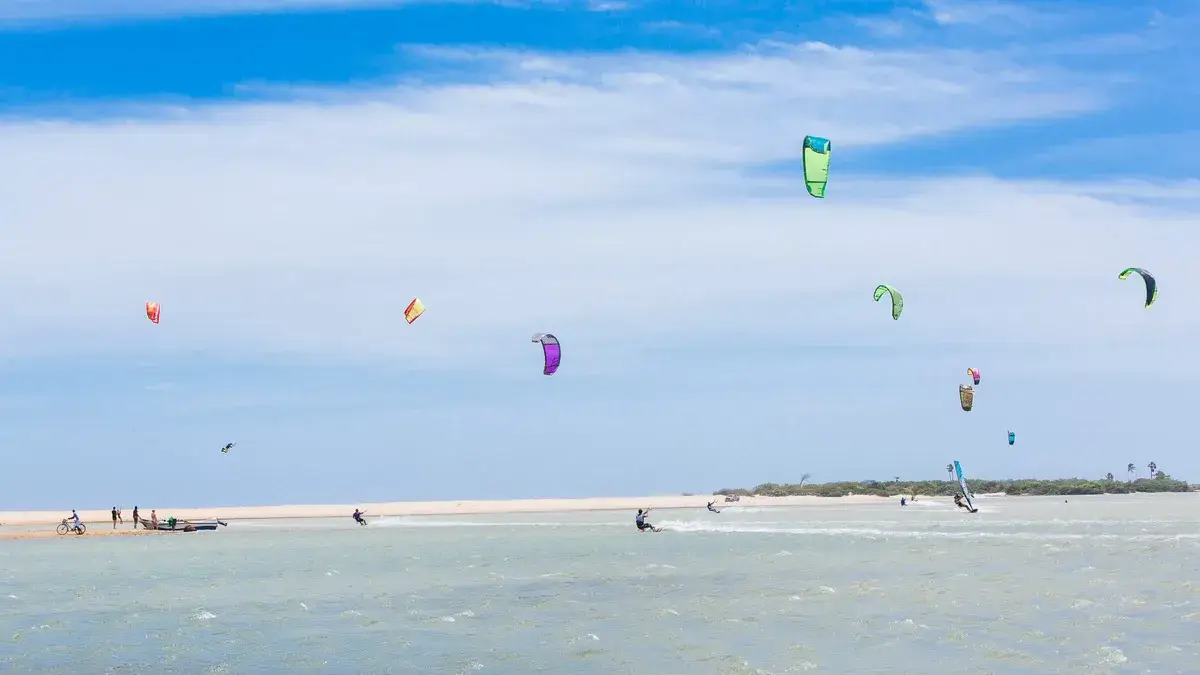
KSL’s beginner lessons take place at the Kalpitiya Big Lagoon in both summer and winter. The lagoon is roughly two kilometres long and around one kilometre wide, with plenty of space, predominantly flat water and large shallow sections. There is a designated area for beginner lessons, while independent riders use the wider lagoon.
From KSL, the Big Lagoon is less than ten minutes away and transport to the teaching area is provided. The conditions allow you to concentrate on one new skill at a time without having to deal with waves while you are still figuring out what the kite is doing.
Day one: learning what the kite actually does
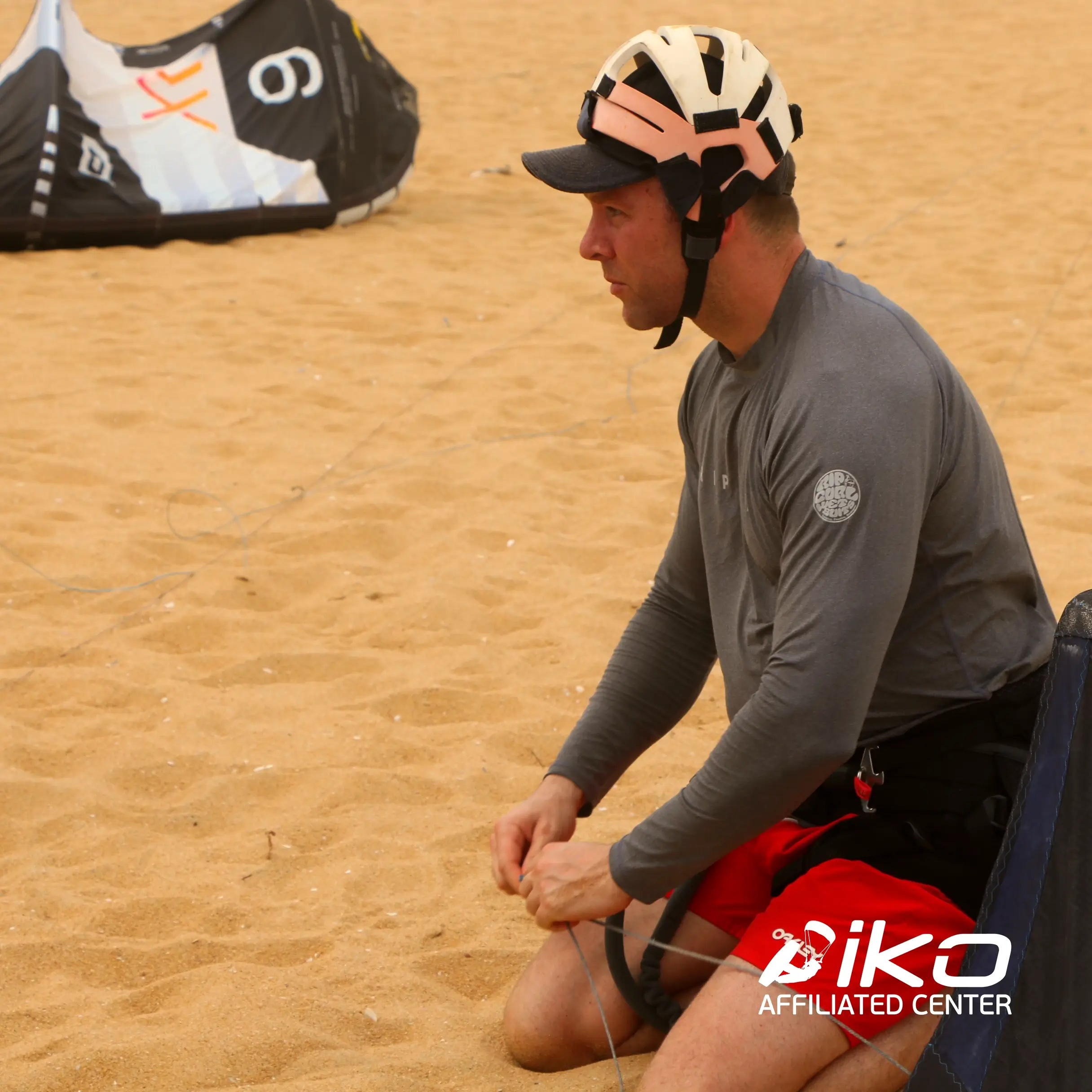
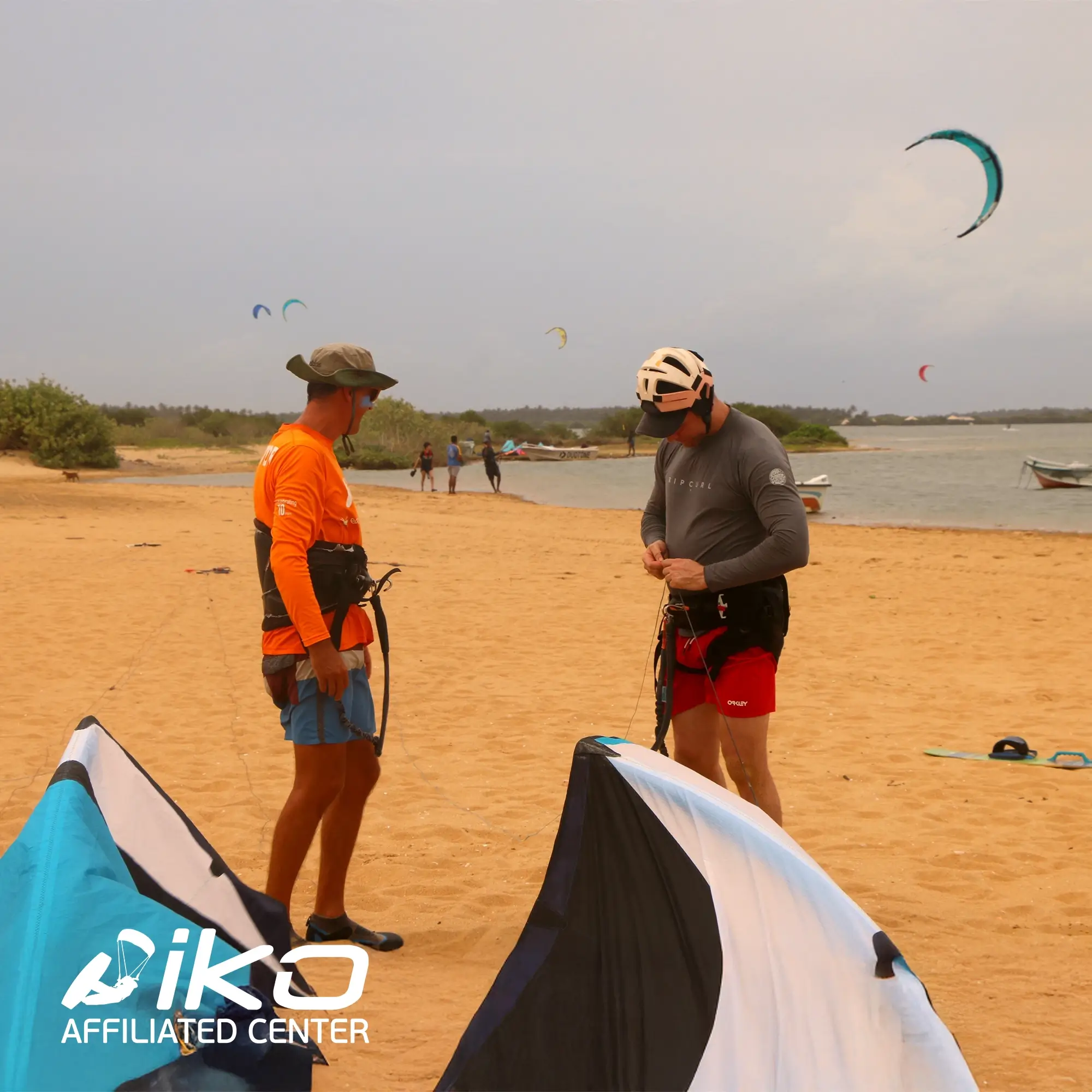
Your first session doesn’t begin with the board. You’ll start with the wind window, safety systems and kite control: where the kite generates power, how to launch and land safely and what to do if something goes wrong.
One of the hardest habits for beginners to break is also one of the most instinctive: pulling on the bar. When you feel unsteady, the natural reaction is to hold on to something. In kitesurfing, that can be exactly the wrong thing to do. Pulling the bar in gives the kite more power, sometimes enough to lift you off your feet and send you through the water. “Release the bar!” is something you’ll hear instructors say a lot during those first sessions. Learning when not to hold on is part of learning to control the kite.
Next comes the water
Once you can control the kite safely, you move into the water. One of the first important skills is body dragging: using the kite to pull yourself through the water without the board. You’ll practise moving in different directions, recovering your board and controlling the kite while your attention is divided between the water, the wind and everything happening around you.
It may not be the part of kitesurfing you pictured when you booked your lessons, but it is something every independent rider needs to know.
And then: the board
Then comes the moment most beginners have been waiting for: the water start. Suddenly, kite control, board position and timing all have to happen at once. You might get onto the board and fall again immediately. The next attempt might take you a few metres. And yes, there may be quite a lot of lagoon water swallowed along the way.
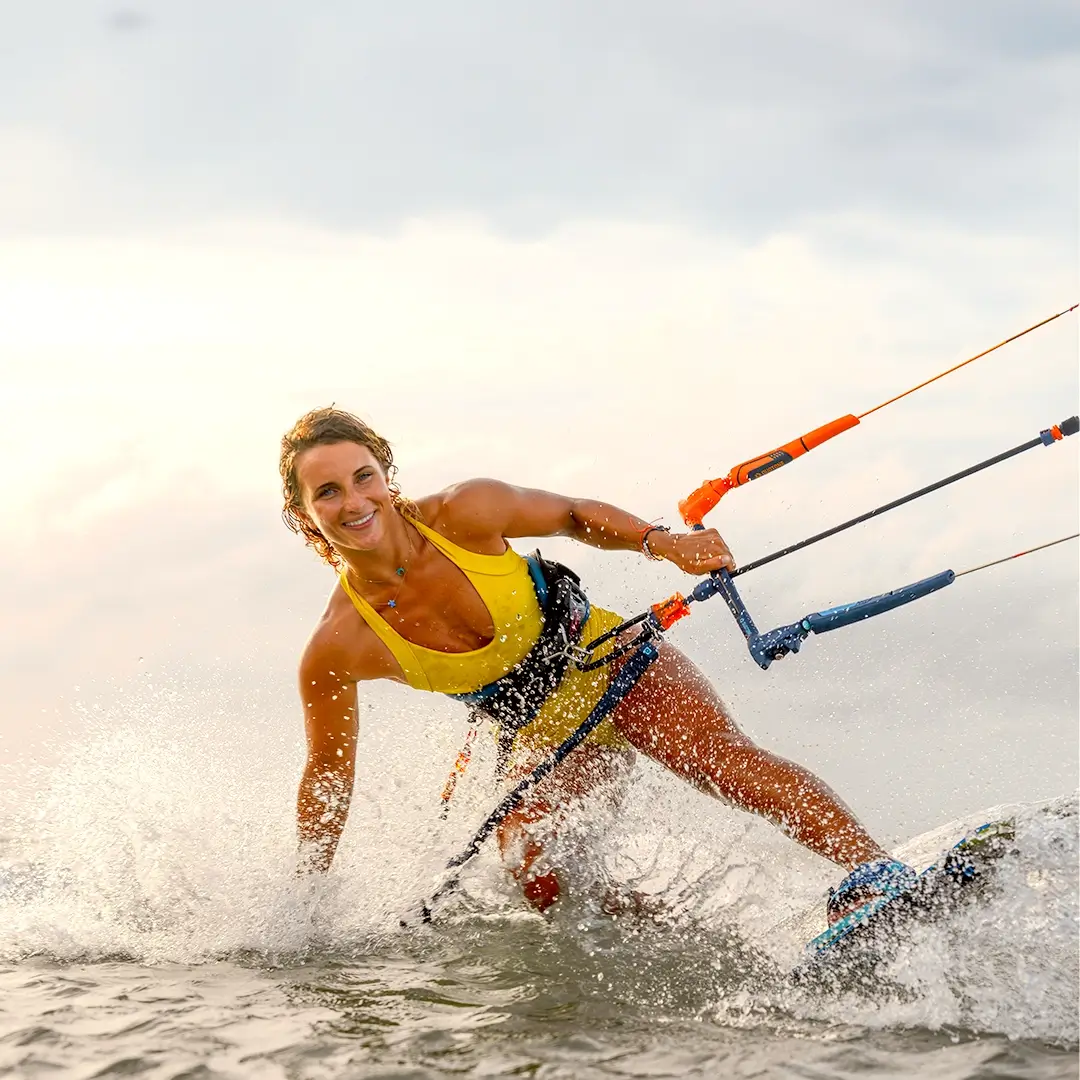
Then one of those attempts works. The kite stays where you need it, the board starts moving and, for the first time, you ride across the lagoon. After all the stopping, starting and trying to remember what your instructor just told you, that first proper ride can feel a little like flying.
How quickly you get there is different for everyone. Some people arrive with experience from other board sports; others need more time with kite control or water starts, and the wind conditions make a difference too. That’s why we prefer to think in skills rather than promising that everyone will be riding after a certain number of days.
How long does it take to learn kitesurfing?
From our experience at KSL, most students need around 9–12 hours of instruction to reach the point where they can ride independently. That is an average, not a deadline.
We recommend allowing at least three days for lessons rather than trying to squeeze everything into one or two intensive sessions. Becoming independent also means more than simply getting onto the board. You need to be able to control the kite, ride safely, recover your board, understand right of way and know what to do when something doesn’t go according to plan.
Is summer or winter better for beginners?
You can learn in both of Kalpitiya’s kite seasons. Summer, roughly from mid-May to mid-October, generally brings stronger and more consistent wind. Winter, from around mid-December to mid-March, tends to have lighter wind that builds later in the day.
KSL uses the Big Lagoon for beginner lessons in both seasons. The small lagoon in front of camp works particularly well for independent riders during winter when the wind direction suits the spot, but lessons still take place at the Big Lagoon.
There isn’t therefore a simple “summer for advanced riders, winter for beginners” rule. The two seasons have a different rhythm, and the better one for your trip depends on what else you want from your time in Kalpitiya. You can read more in our Summer vs Winter Kitesurfing in Kalpitiya guide.
Do I need to bring my own kite equipment?
No. Beginner lessons include the equipment needed for the session, and your instructor can choose the gear according to your level and the conditions that day. Buying equipment before you have started learning rarely makes much sense; once you have some experience, you will have a much better idea of what suits you.
What is worth bringing is much simpler: swimwear, a rashguard, good sun protection and something to drink. You’ll spend a lot of time outside, and the Sri Lankan sun is easy to underestimate when there is wind on the lagoon.
What happens if the wind doesn’t cooperate?
Kitesurfing still depends on the weather, even during Kalpitiya’s main wind seasons. Conditions vary from day to day, and your instructor will adjust the lesson to what is useful and safe rather than forcing a fixed programme.
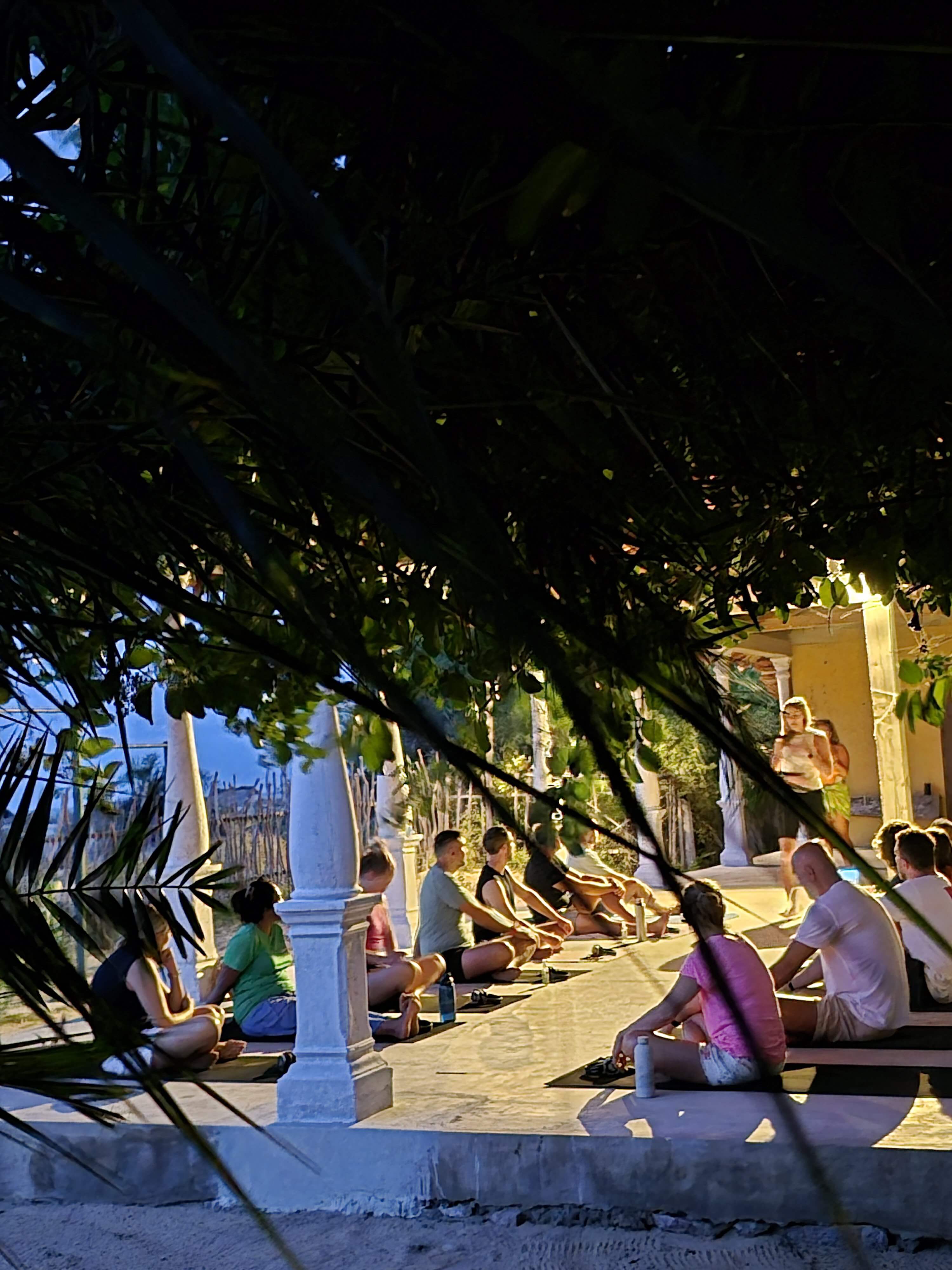
This is another reason to give yourself several days in Kalpitiya. A little flexibility takes the pressure off having to reach a particular milestone in one afternoon. Especially in winter, slower mornings can also leave time for yoga, diving or dolphin watching before the wind builds later in the day.
Can I come to Kalpitiya alone?
Yes. Plenty of people arrive at kite camps on their own, and learning gives your days a natural structure. You head to the lagoon with other riders, spend time learning together and tend to see many of the same faces again back at camp.
At KSL, breakfast, lunch and dinner are served at long communal tables, so meeting people tends to happen naturally over meals or on the way to the lagoon. You don’t need to arrive with a group to become part of one.
What should I expect from my first kitesurfing trip?
Probably some frustration, a fair amount of lagoon water and, somewhere along the way, those first few metres on the board.
Once those first rides become more consistent, Kalpitiya starts to look quite different. The Big Lagoon is where you learn the basics; Vella Island, Dream Spot, Mini Vella, Donkey Spot and the wider Puttalam Lagoon can come later.
First, learn to fly the kite.
Ready to start?
You can find current lesson options, course information and beginner packages on our Kite School in Kalpitiya page.