Zum Erkunden blättern

Donnerstag Oktober 29, 2026
Artikel über Kitesurfen
Surfing vs Kitesurfing in Sri Lanka: Which Should You Try?
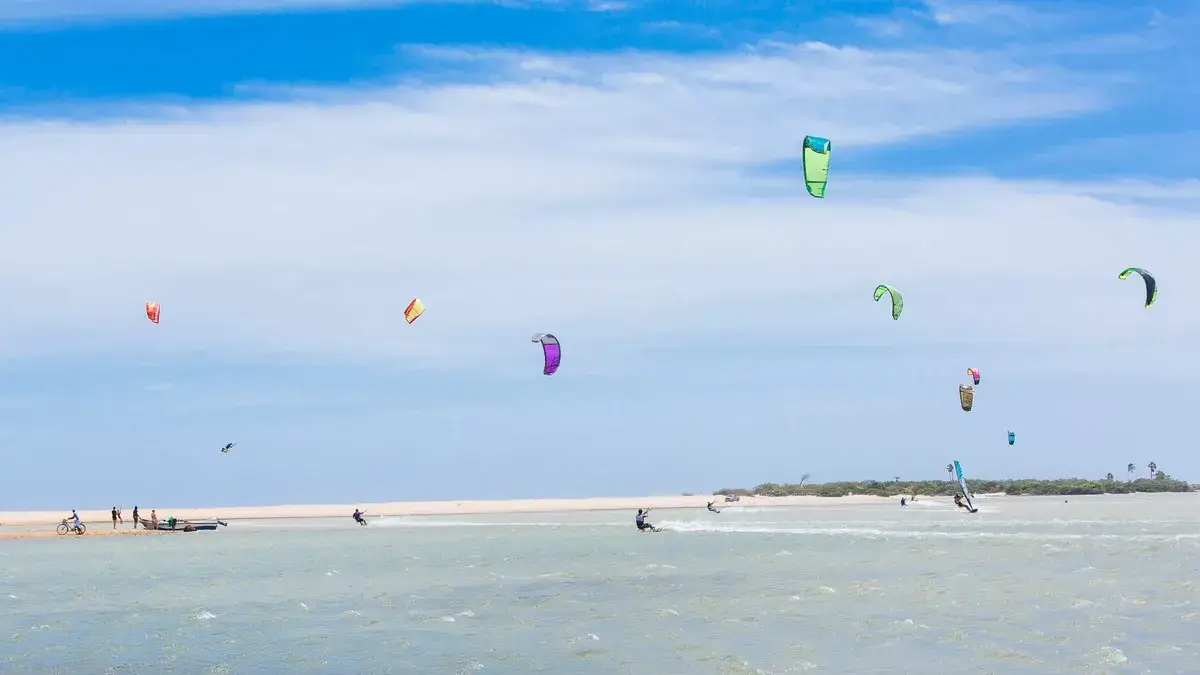
Sri Lanka is already firmly on the map for surfers. Weligama, Ahangama and Hiriketiya draw surfers to the South Coast during the northern winter, while Arugam Bay takes over during the middle of the year. But there is another boardsport with two strong seasons in Sri Lanka. On the north-west coast, Kalpitiya has become the country’s main kitesurfing destination, with large areas of flat lagoon water and seasonal wind from two different monsoons. If you already surf, the obvious question is whether those skills transfer to kitesurfing. And if you are completely new to both sports, which one should you try?
The answer depends less on which sport is “easier” and more on how differently they work.
What is the main difference between surfing and kitesurfing?
In surfing, the wave provides the energy. You paddle into position, choose a wave, catch it and use the board to ride along its face. In kitesurfing, the energy comes from the wind. A large controllable kite generates the power that pulls you across the water while you ride a much smaller board. That changes the learning process considerably.
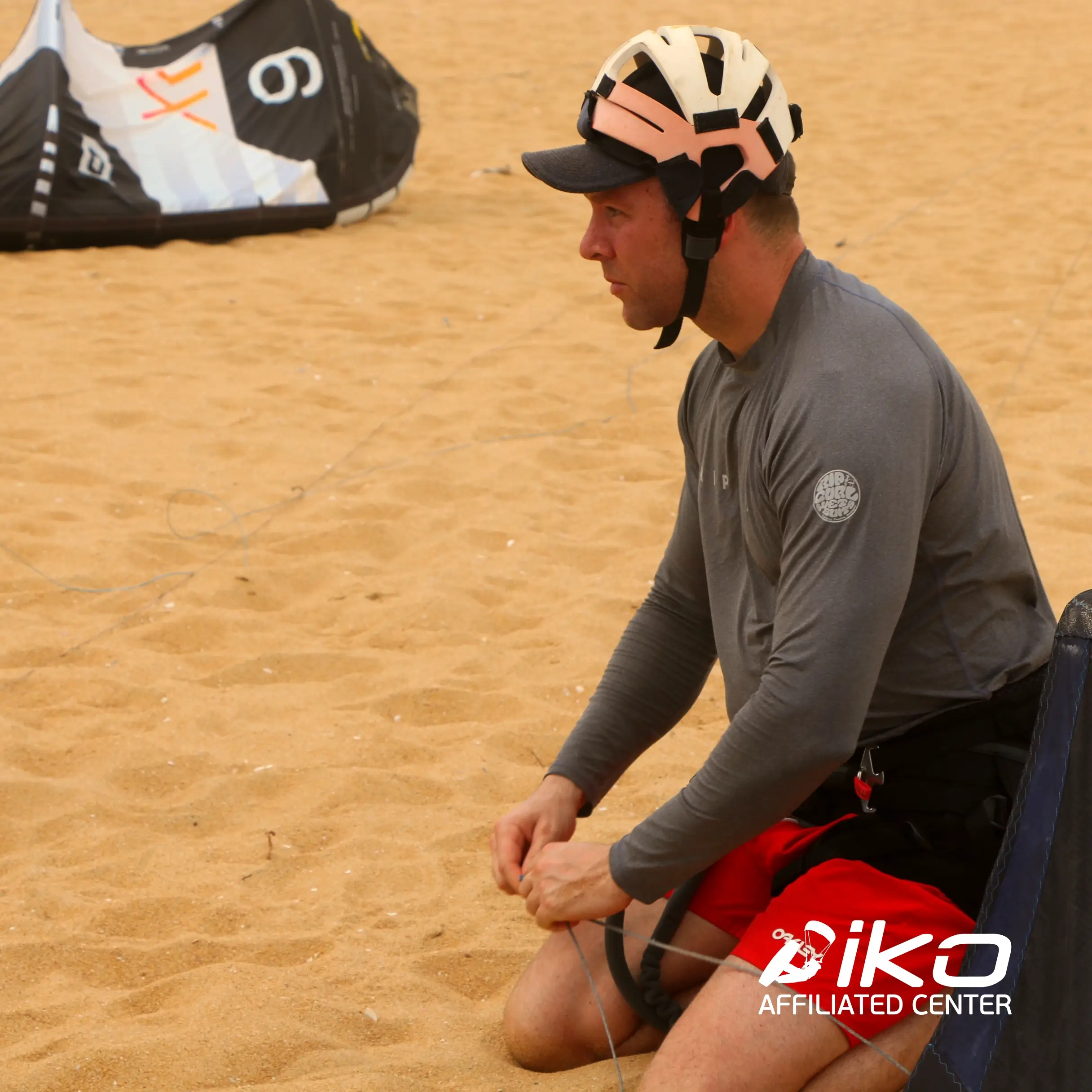
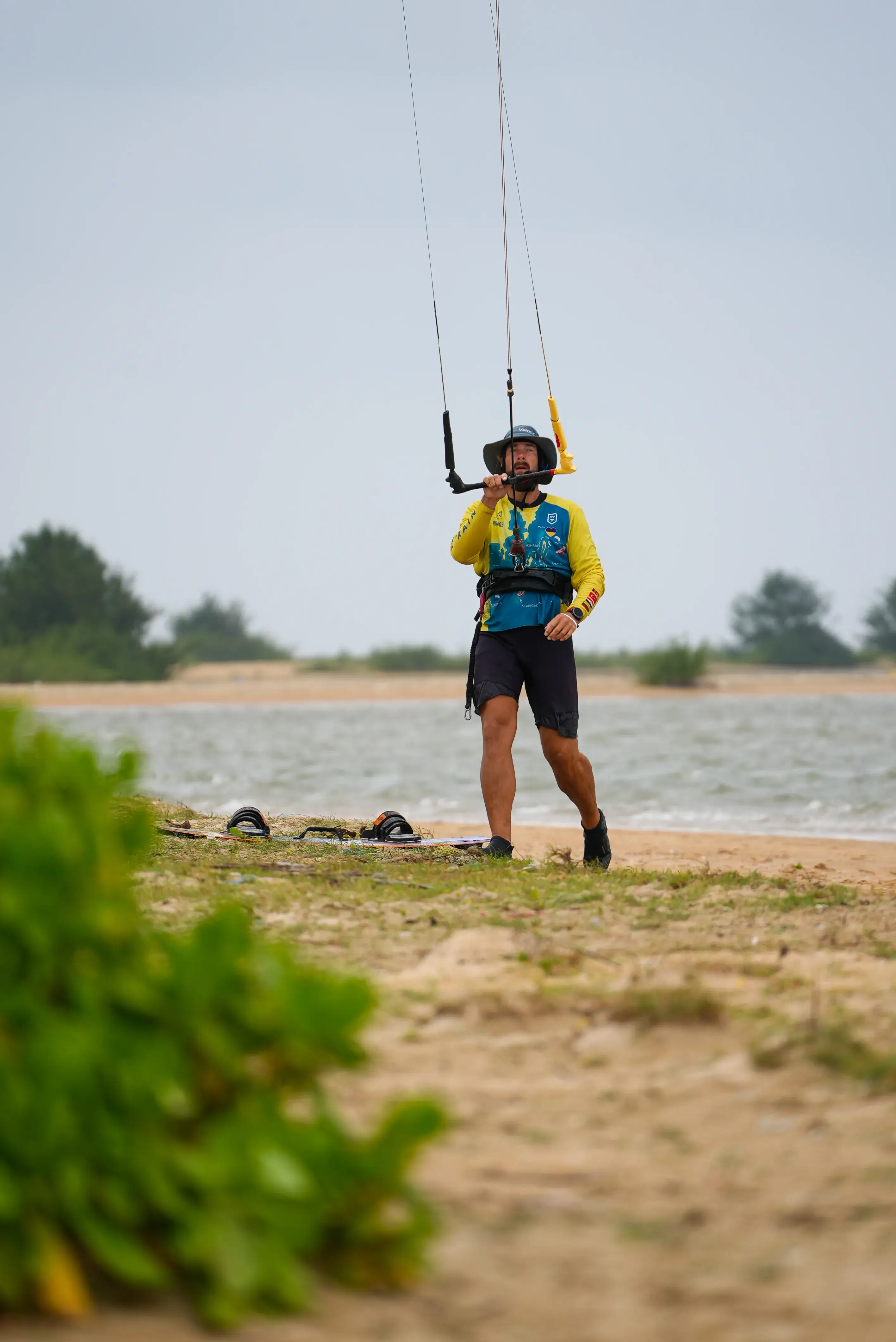
A beginner surfer can usually get into the water with a board fairly quickly. Early lessons tend to focus on paddling, positioning, the pop-up and learning to recognise suitable waves. A beginner kitesurfer normally spends considerably more time learning the power source before worrying about the board. Kite control, the wind window and safety systems come first. From there, students progress to controlling the kite in the water, body dragging, recovering the board and eventually putting kite and board together for their first water starts. At KSL, we teach these stages on the flat water of Kalpitiya Lagoon rather than expecting beginners to deal with waves at the same time.
Does surfing help you learn to kitesurf?
Yes, but it does not allow you to skip the fundamentals. Surfers already tend to be comfortable in the ocean and on a board. Balance, stance and an instinct for how a board responds beneath your feet can all help once you reach the board stage of a kitesurfing course. The kite itself is different. One of the most common instincts among beginners is to hold tightly onto the bar when they suddenly feel more power. In kitesurfing, pulling the bar towards you can increase that power. Learning when to release pressure, where the kite is in the wind window and how to respond when something does not go according to plan are skills that have little equivalent in surfing. For that reason, an experienced surfer is still a beginner when first learning to fly a kite. The advantage often appears later. Once kite control and body dragging begin to feel natural, previous board experience can make the transition to water starts and riding easier.
Is kitesurfing harder than surfing?
There is no particularly useful yes-or-no answer. The first few hours of the two sports are difficult for different reasons. With kitesurfing, there is more technical information to absorb before you ride independently. You need to understand the wind, control the kite and know how to use the safety systems before combining everything with a board. Surfing has a simpler equipment setup, but progressing beyond the first stages introduces a different set of challenges: paddling, wave selection, timing, positioning and reading a constantly changing line-up. There is another important difference. A kitesurfing lesson does not depend on catching a particular wave. In suitable wind and flat water, an instructor can repeat the same exercise with a student many times. That makes the learning process quite structured. Neither sport offers an instant shortcut. They simply ask you to solve different problems.
Do you need to know how to surf before learning to kitesurf?
No. Many people arriving at KSL for their first kitesurfing course have never surfed or practised another boardsport. Being comfortable in the water helps, but previous surfing, wakeboarding or snowboarding experience is not a prerequisite. Beginners start with the kite and work through the skills in sequence. This is also why Kalpitiya Lagoon works well as a teaching environment. Lessons take place on flat water, so students can concentrate on kite control and technique without simultaneously having to read breaking waves.
When can you surf and kitesurf in Sri Lanka?
This is where Sri Lanka becomes particularly interesting if you want to try both. The South and South-West Coast surf season generally runs from around November to April. Weligama, Ahangama, Midigama, Hikkaduwa and Hiriketiya are among the established areas, with December to March sitting at the heart of the season. Kalpitiya’s winter kitesurfing season runs from roughly mid-December to mid-March. The wind is generally lighter than during the summer season and tends to build towards midday and into the afternoon. That creates a clear overlap. A winter trip to Sri Lanka can include time surfing on the South Coast followed by several days in Kalpitiya learning to kitesurf. There is a second overlap in the middle of the year. The East Coast surf season around Arugam Bay runs broadly from May into September, while Kalpitiya’s main kitesurfing season runs from around mid-May to mid-October. This is the stronger of Kalpitiya’s two wind seasons, with the south-west monsoon typically bringing longer and windier days. The two sports therefore do not need to be competing choices. Depending on when you travel, you can build both into the same Sri Lanka trip.
What should surfers expect from their first kitesurfing lesson?
Probably less board time than you expect. The temptation, particularly if you already surf, is to look at the board and think that is the part you need to master. Initially, it is usually the kite that deserves your attention. You will learn how the wind window works, how to launch and control the kite, how the safety system operates and what happens when you move the kite through different areas of the window. From there, you take those skills into the water. Body dragging teaches you to use the kite to move through the water without the board. It is an essential skill for recovering your board later and also gives you time to understand the relationship between kite position, wind and direction of travel. Only then does the board enter the equation. For surfers, that can feel slightly backwards at first. Once you reach the water-start stage, however, the familiarity of standing sideways on a board begins to become useful.
Where should you learn to kitesurf in Sri Lanka?
Kalpitiya is Sri Lanka’s established kitesurfing centre, and its lagoon is one of the main reasons. The large area of flat water gives beginners space to practise without having to deal with surf. During both kite seasons, KSL teaches complete beginners here, while more experienced riders use the wider Kalpitiya peninsula for independent sessions, downwinders and trips to other kite spots. KSL has been teaching kitesurfing in Kalpitiya since 2010. Courses are available for people starting from zero as well as riders looking to progress particular skills. And if you arrive with years of surfing behind you, we will still start with the kite.
Surf or kite? You don’t necessarily have to choose
If the purpose of your Sri Lanka trip is purely surfing, there are good reasons to spend your time following the swell around the South or East Coast. But if you are already travelling around the island and are curious about another way of moving across the water, Kalpitiya adds something quite different. Surfing teaches you to work with a wave. Kitesurfing asks you to understand the wind. Sri Lanka happens to give you access to both.
Planning to try kitesurfing while you’re in Sri Lanka?
Find out more about kitesurfing lessons at KSL or read our beginner’s guide to kitesurfing in Kalpitiya.