Défiler pour explorer

jeudi août 20, 2026
Articles sur le kitesurf
Different Places, Shared Future: Education for Sustainable Development Between Berlin and Kalpitiya
Some journeys are easy to describe. You can list the places you visited, the workshops you attended or the kilometres you travelled. This wasn’t one of them.
For two weeks in June, eight students from Kalpitiya travelled to Berlin as part of the EDU Box 2030 project. They stayed with host families, attended school alongside their German partners and took part in workshops exploring sustainability, science, creativity and community life. On paper, it was a student exchange. In reality, it was two weeks of living, learning and working together.
Learning Beyond the Classroom
The Berlin–Kalpitiya exchange is part of the Education for Sustainable Development (ESD) initiative, which encourages young people to explore global challenges through practical experience rather than traditional classroom teaching.
Instead of spending days listening to presentations, the students were encouraged to ask questions, test ideas and learn from one another. From the very beginning, every student from Kalpitiya was paired with a student from Berlin. That partnership remained throughout the programme. They travelled to school together, worked in the same teams and, perhaps most importantly, shared everyday life.
Living with host families quickly changed the rhythm of the exchange. Conversations continued long after the workshops had finished, often around the dinner table or on the journey to school the following morning.
Science, Creativity and Community
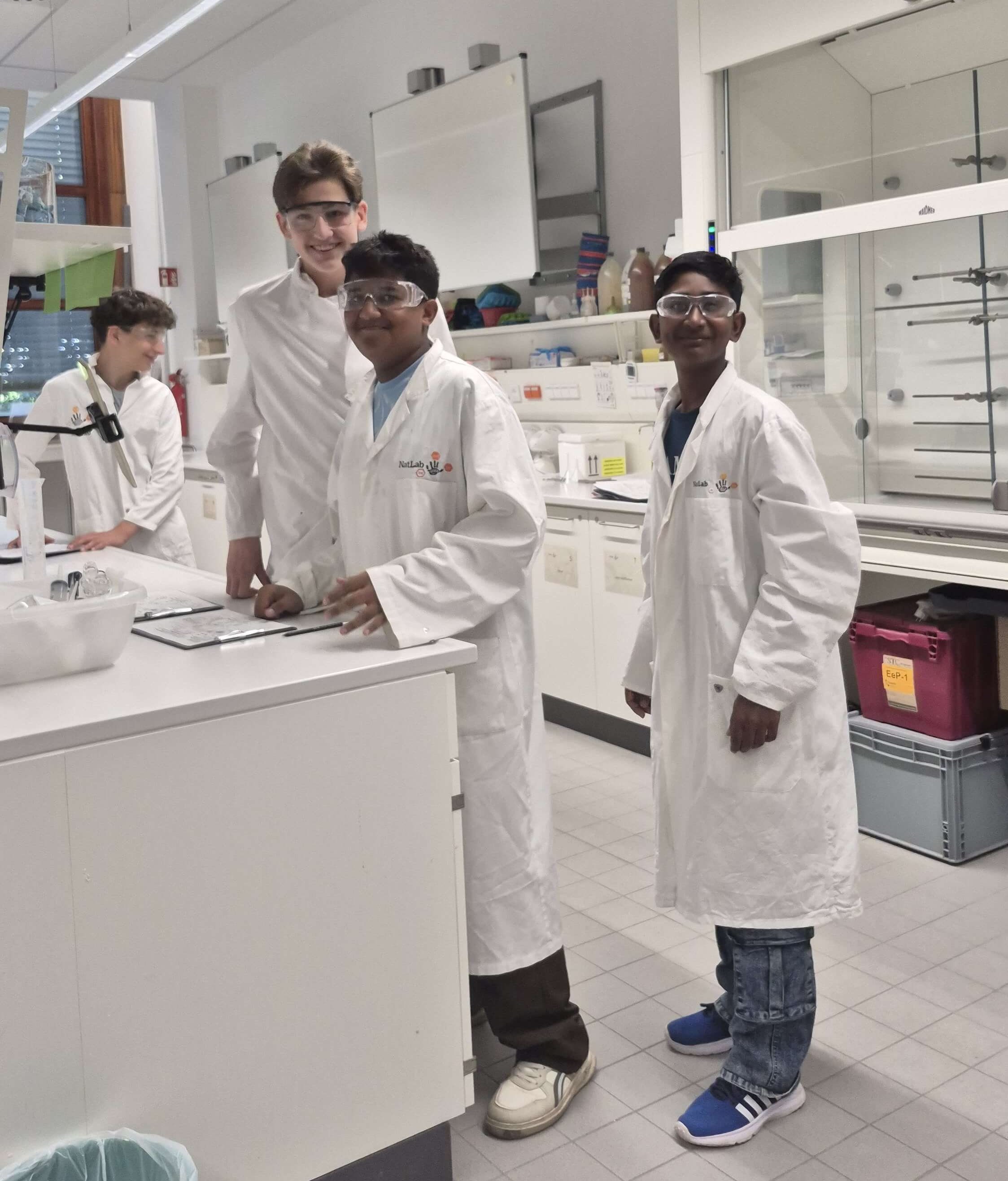
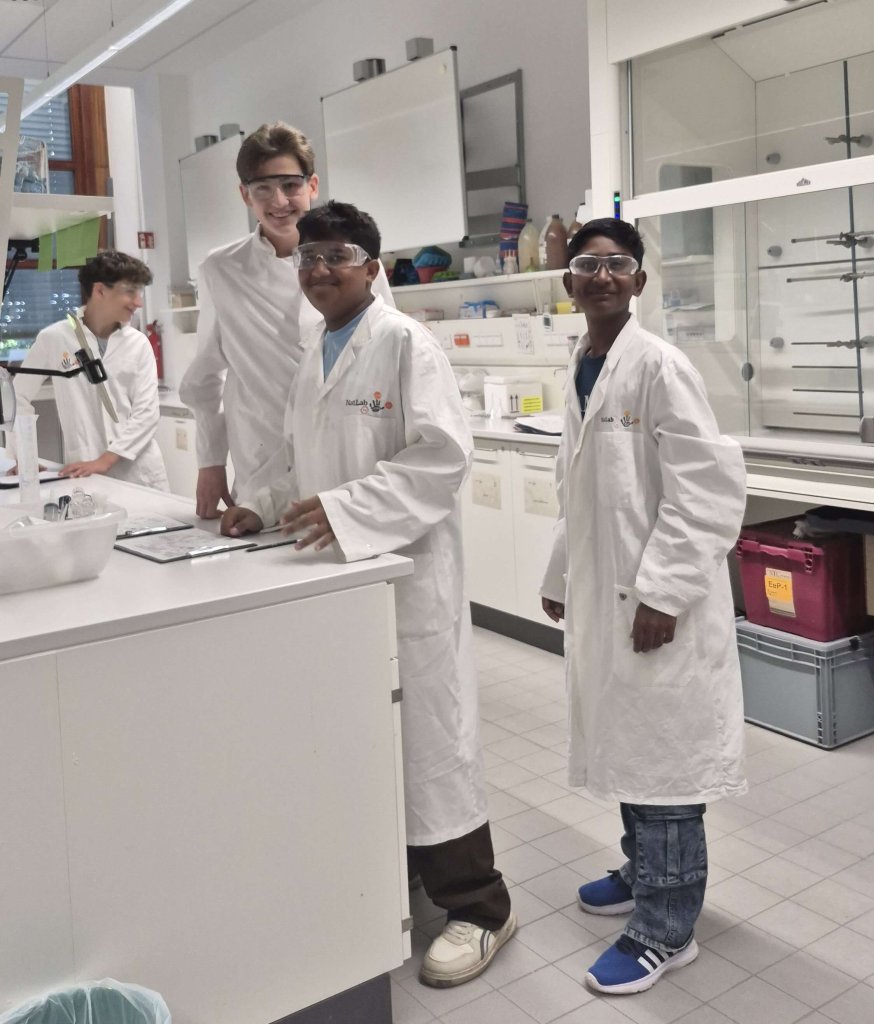
Every activity offered a different perspective on sustainability. At NatLab, the science education centre of Freie Universität Berlin, students explored climate change through practical experiments. Instead of learning about environmental science from a textbook, they worked together in the laboratory, discussing observations and testing ideas.
Later, a visit to the Futurium encouraged them to think about how cities might evolve in the future and what role young people could play in shaping more sustainable communities.
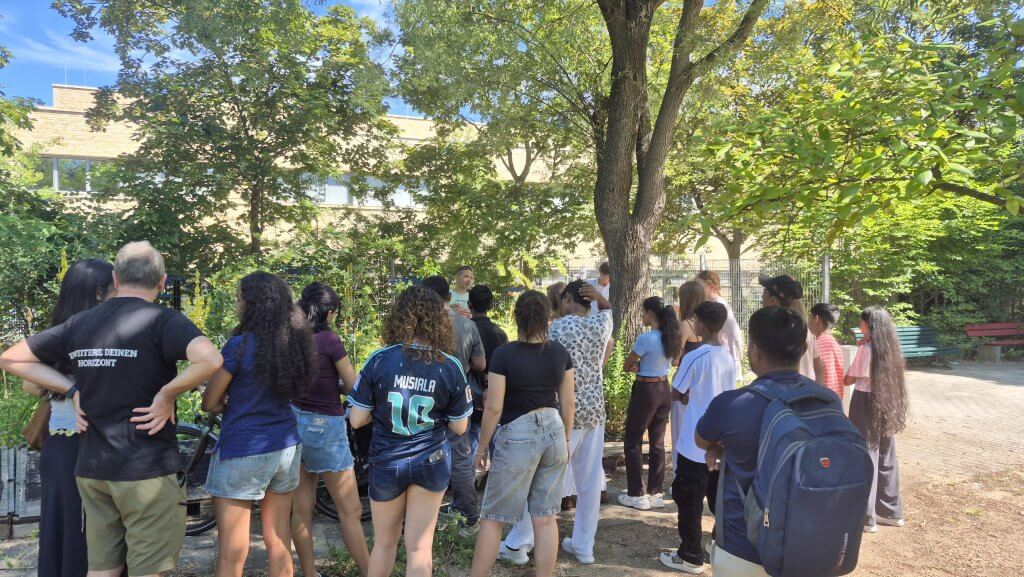
The programme also stepped outside the laboratory. At Urban Gardening Breitscheidplatz, students rolled seed bombs by hand before planting greenery together in the school grounds. It was a simple activity, but one that naturally led to conversations about public spaces, biodiversity and community involvement.
The questions that followed were often just as interesting as the workshops themselves. Which ideas could work in Kalpitiya? Which approaches already existed there? And what might Berlin learn from a coastal community where daily life is closely connected to nature? There were no simple answers, and that was part of the value of the exchange.
A Calendar Created Together
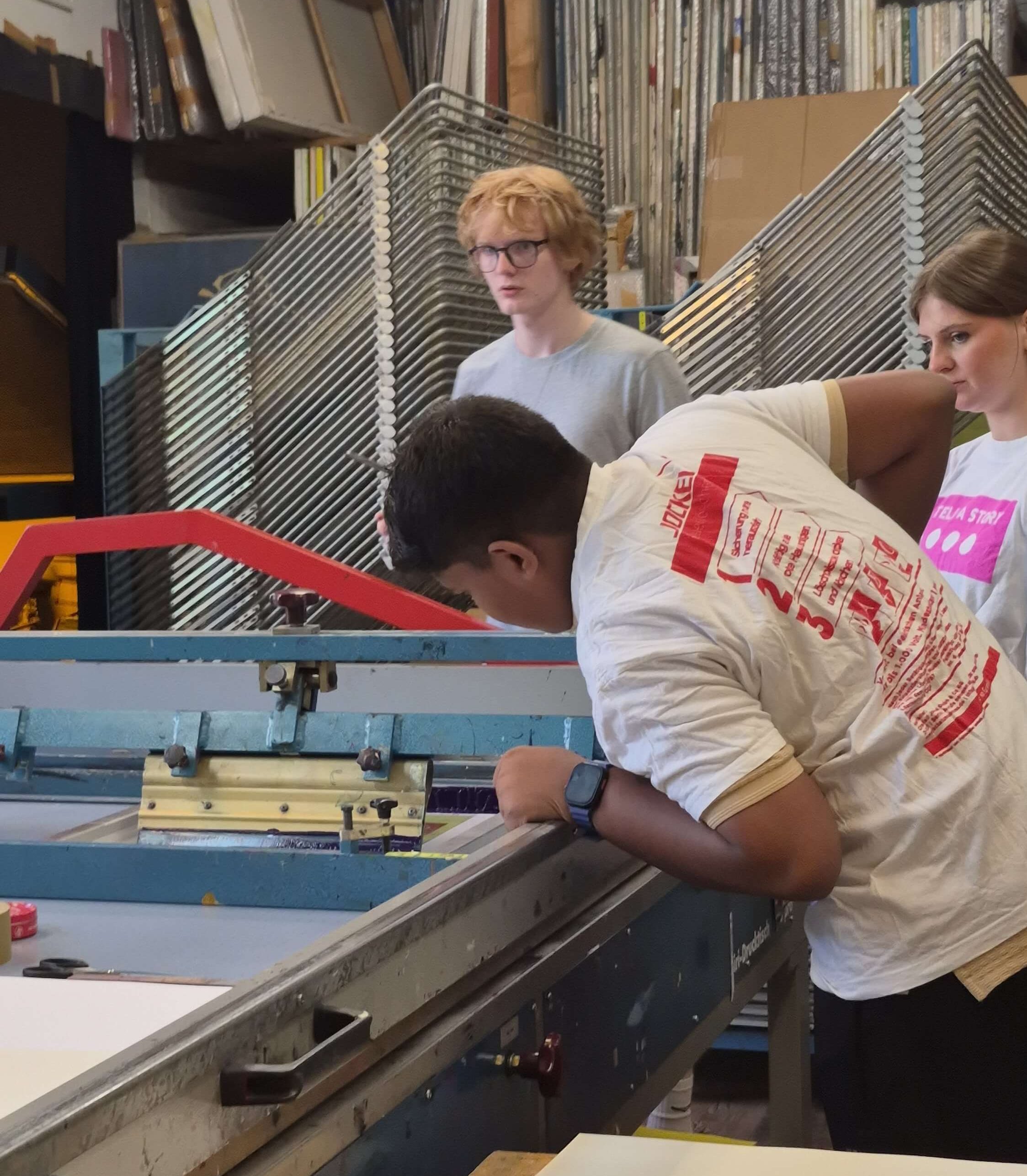
One of the busiest days of the programme took place at the screen-printing workshop Siebdruck 1×2. Working in mixed teams, the students designed and printed a sustainability calendar. Each group was responsible for one month, discussing colours, illustrations and layouts before carefully printing each page by hand.
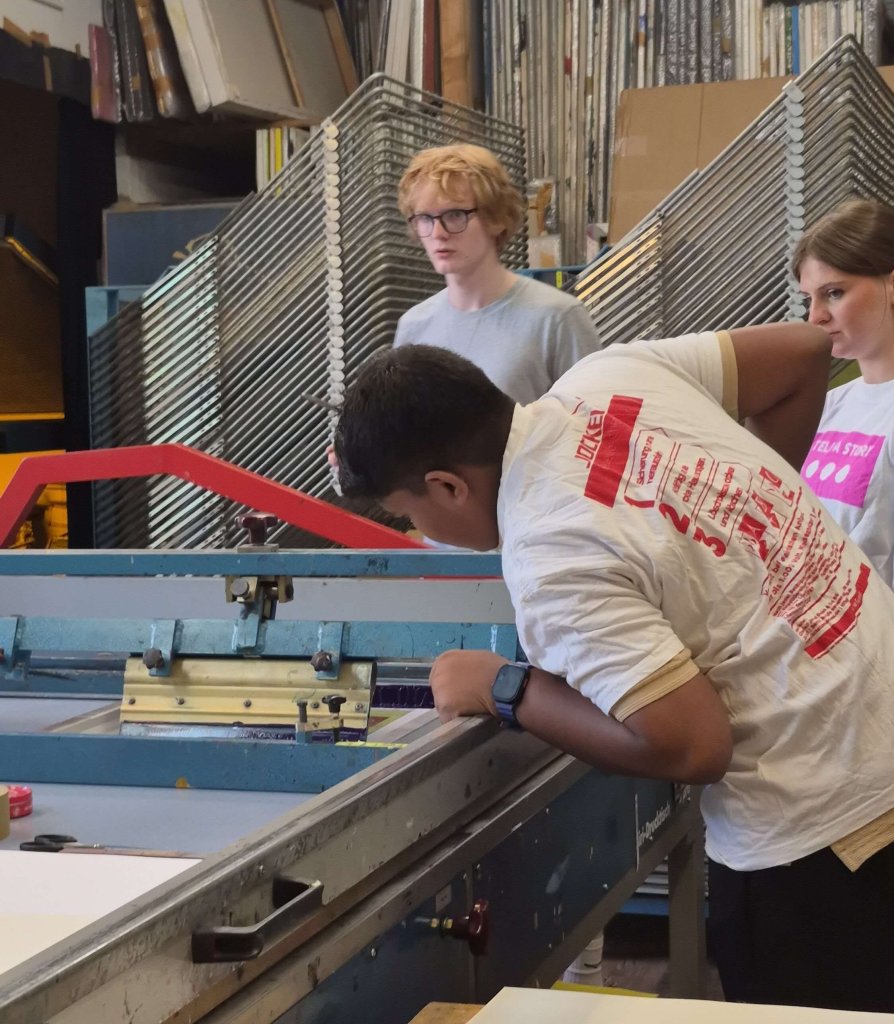
By the end of the workshop, 75 calendars were drying on the racks. Every participant took one home, while the remaining calendars will be sold in Berlin to help support future exchanges. The calendars became more than a creative project. They are a reminder that each exchange helps create opportunities for the next one.
Seeing Sustainability from Different Perspectives
One of the strengths of the programme was that it never assumed there was only one way of approaching sustainability. During meetings with local citizens’ initiatives, students explored topics such as waste management and environmental responsibility. These visits encouraged discussions about which ideas could realistically be adapted in Kalpitiya, while also recognising that every community already has its own strengths.
For many students, some of the most valuable conversations happened when comparing everyday life rather than formal projects. How do neighbours work together? How do people use public spaces? What responsibilities do young people take within their communities? Looking at these questions from different cultural perspectives helped broaden the discussion beyond environmental issues alone.
Working Towards a Shared Goal
The exchange also strengthened partnerships beyond the schools. Alongside the student programme, representatives from Kalpitiya met with officials from the District Office of Charlottenburg-Wilmersdorf to exchange ideas on local government, environmental management and future cooperation. These conversations will contribute to the ongoing planning of the Community Centre and Sustainability Hub in Kalpitiya, which is intended to become a space for environmental education, youth activities and community initiatives. For everyone involved, the exchange is part of a much longer journey rather than a stand-alone event.
Looking Ahead
The partnership continues later this year when students from Berlin travel to Kalpitiya for the second part of the exchange. They will experience the places their Sri Lankan partners have spent the past two weeks describing: local schools, the lagoon, nearby villages and the community projects that shape everyday life in Kalpitiya. The exchange will continue, but the direction will change. That is what makes the partnership work. Both groups have the opportunity to be hosts, to be guests and to see their own communities through someone else’s eyes.
Why This Matters
At Kitesurfing Lanka, sustainability has always meant more than protecting the natural environment around the lagoon. It also means investing in the people who live here and creating opportunities for young people to build connections beyond their own communities.
Projects such as EDU Box 2030 show that sustainability is not only about environmental solutions. It is also about cooperation, curiosity and the willingness to learn from different experiences.
The Berlin exchange has come to an end. The conversations it started are only just beginning.