Scroll naar Verkennen

vrijdag november 13, 2026
Kitesurf artikelen
Tourism on the Frontline: Why the Future of Tourism Depends on the Places and People Around Us
At Kitesurfing Lanka, we have spent more than 15 years learning that a successful tourism business is about much more than attracting visitors. It is about the relationships we build, the environment we depend on and the opportunities we create for the people around us.
Tourism businesses operate on the frontline of environmental change.
For those of us working in coastal destinations, the connection is particularly clear. Our businesses depend on healthy oceans, thriving marine ecosystems, beautiful beaches and strong local communities. Yet these are also the very things most vulnerable to environmental degradation, climate change and unsustainable development.
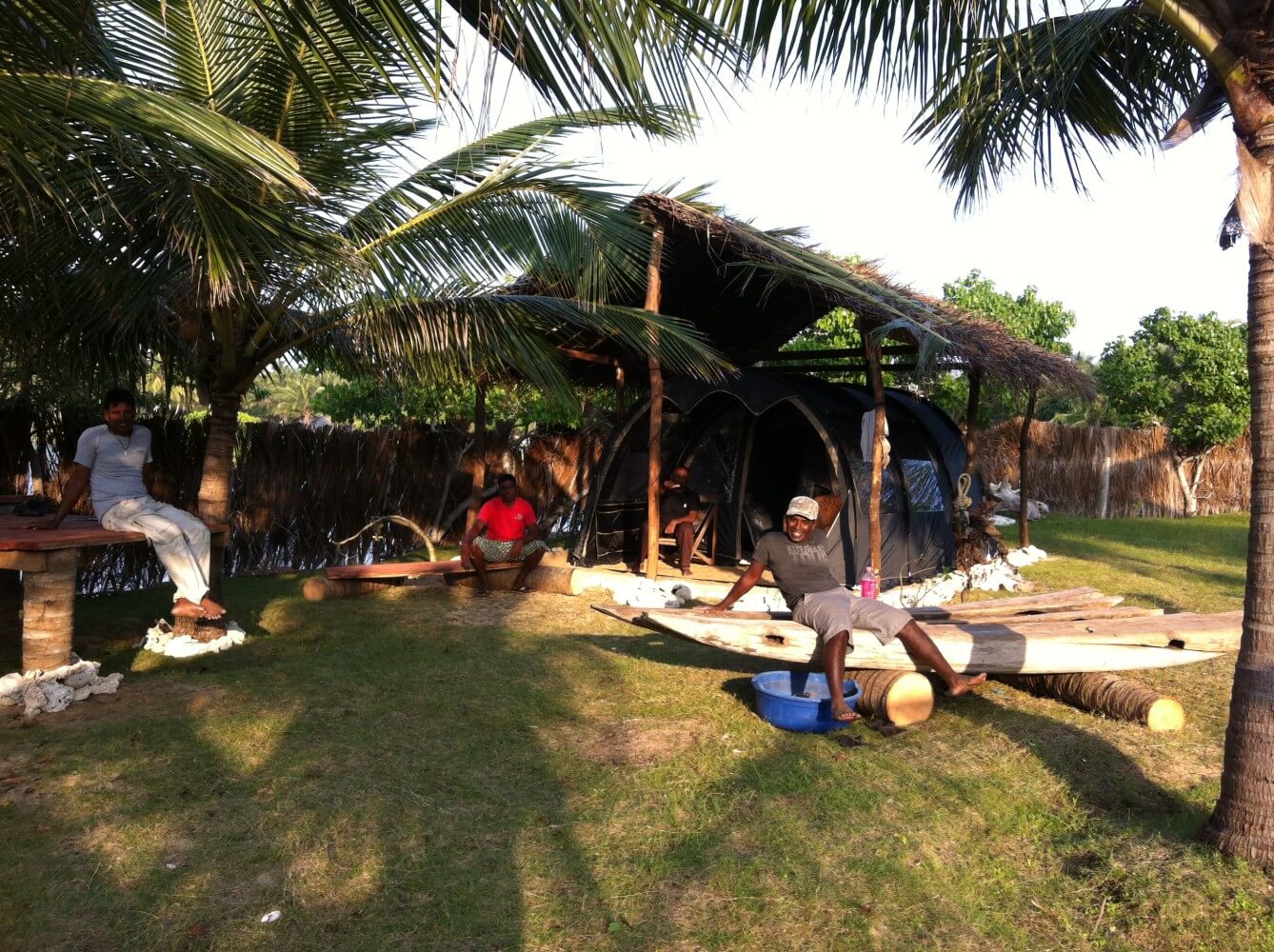
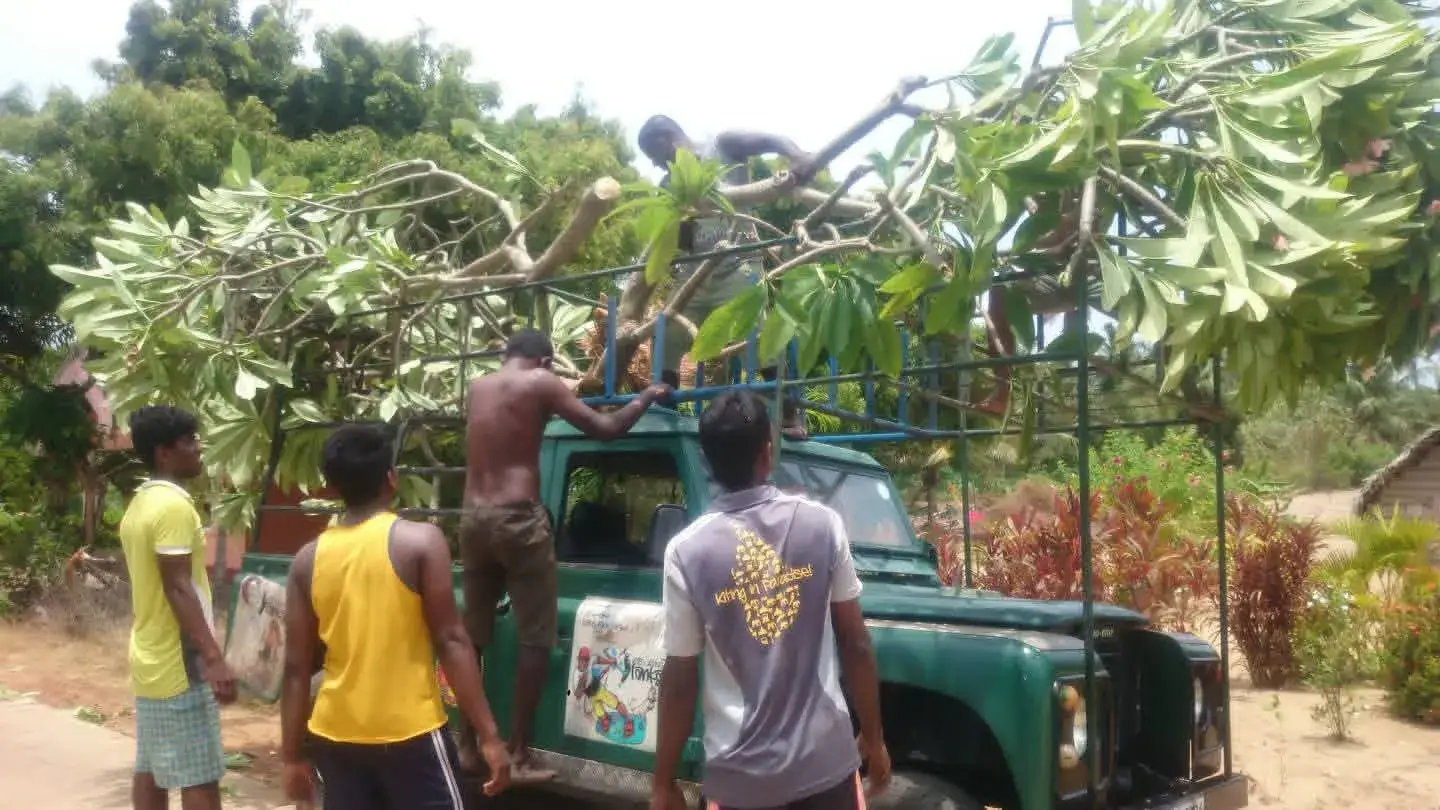
Early days, 15 years ago with the local community who still are with us
At Kitesurfing Lanka, in Kalpitiya, Sri Lanka, we have spent more than 15 years navigating this relationship between tourism, conservation and community development.
We certainly didn’t begin with a master plan for regenerative tourism. Many of the initiatives we are involved in today started with simple observations, personal interests and opportunities that presented themselves along the way.
Over time, we have come to understand that meaningful change often grows from taking the first step, working with others and allowing good ideas to develop.
The tourism pie is big enough for everyone
One of the most important lessons we have learnt is that tourism should not be a competition in which one business succeeds at the expense of everyone else.
When we first started operating in Kalpitiya, building relationships with the local fishing community was not always straightforward. We had different interests and, at times, different expectations of how the area should develop.
Instead of seeing the community as an obstacle, we recognised that we needed to find ways to work together.
Today, we collaborate with local boat operators, fishermen, transport providers and other small businesses. We create opportunities for local service providers to participate in tourism, rather than trying to control every part of the visitor experience ourselves.
One example is our relationship with local fishing operators who also offer dolphin-watching experiences. People like Sugath have developed their own tourism businesses alongside their traditional livelihoods. His journey is his own, built through his initiative and hard work, but it demonstrates what can happen when local people have the space and opportunity to participate in a growing tourism economy.
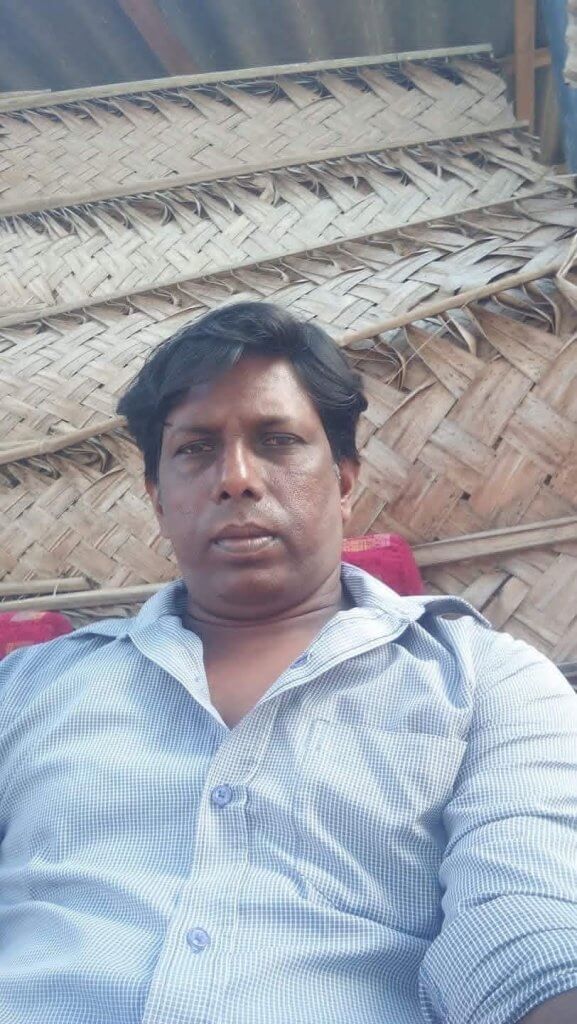
Sugath Emmanuel from the Semuthu Fishing Society
We believe that the tourism pie is big enough for everyone to benefit, as long as we don’t insist on eating the whole pie ourselves.
Tourism should strengthen local livelihoods, not replace them
The pandemic and Sri Lanka’s subsequent economic crisis reminded us how vulnerable a tourism-dependent economy can be.
When visitors stopped arriving, many communities had to rely on other livelihoods, including fishing and agriculture. It reinforced an important lesson: tourism should complement local economies, not replace the activities and knowledge that have sustained communities for generations.
A resilient destination is one where people have choices. Tourism can provide additional income and new opportunities while traditional livelihoods continue to play an important role.
We need to ask ourselves whether tourism development is genuinely strengthening the local economy, or simply creating another form of dependence.
Conservation begins with the places we depend on
Our involvement in mangrove restoration is one example of how environmental initiatives can develop organically.
What began with our founder’s father planting a few seedlings gradually grew into a wider restoration effort involving more people and organisations.
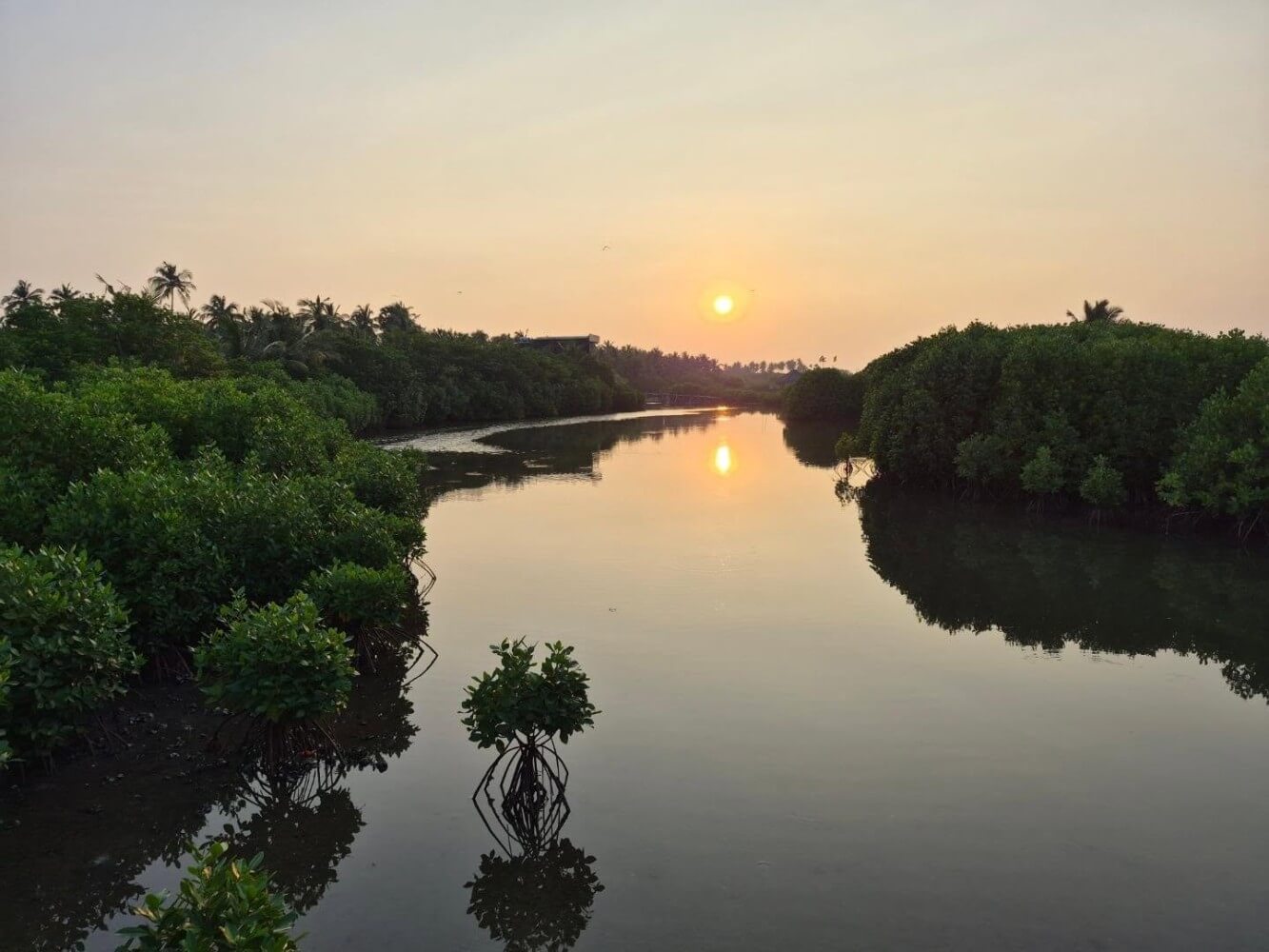
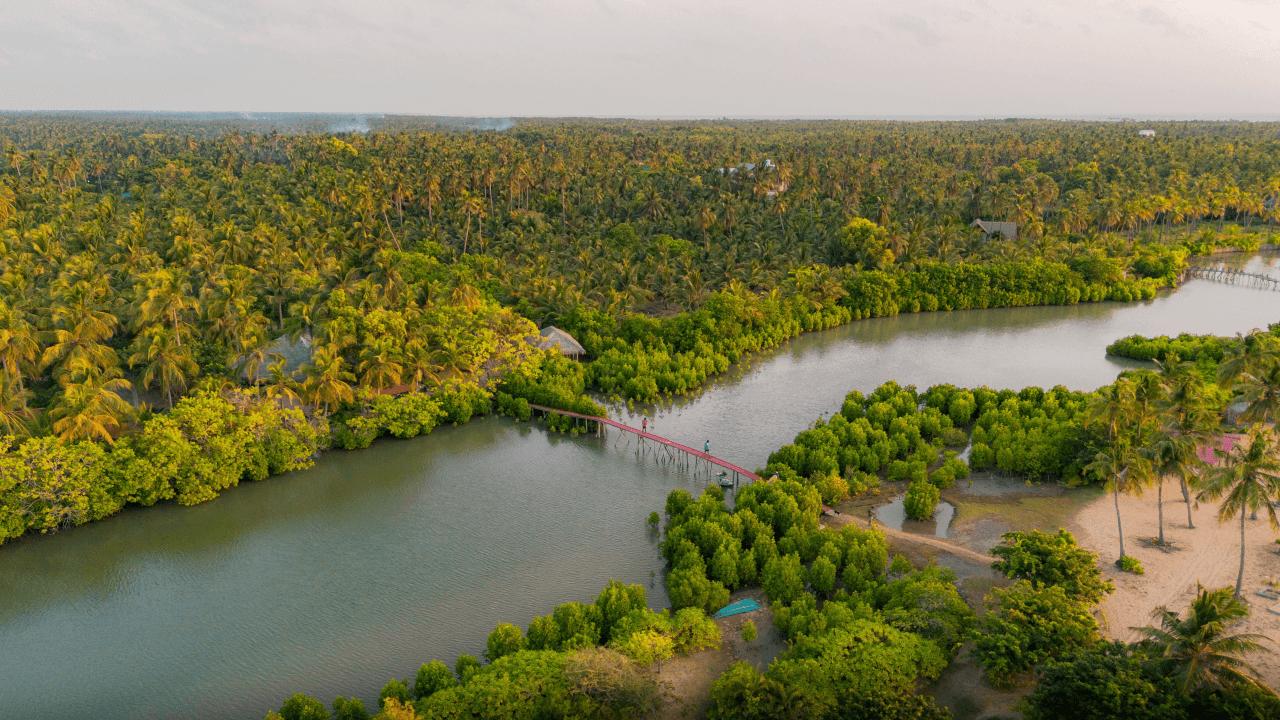
The mangroves grown and we have a thriving eco system now in the environs around Kitesurfing Lanka
The work has taught us that conservation is not a one-off activity. Planting trees is only the beginning. Restoration requires appropriate knowledge, the right species and locations, continued care and long-term commitment.
It also requires collaboration. No single business or individual can protect an ecosystem alone.
The waste we cannot ignore
Waste management remains one of the biggest environmental challenges facing Sri Lanka.
Living and working on the coast means seeing the problem first-hand. Waste washes onto our beaches, sometimes from far beyond the places where it eventually ends up.
At Kitesurfing Lanka, we have worked to reduce single-use plastics, avoid selling PET bottled water and organise beach clean-ups. We have also explored creative ways of reusing discarded materials.
For one of our founders, this became an artistic journey, using ocean plastic and other discarded materials to create artworks and the environmental film Monsters Grot.
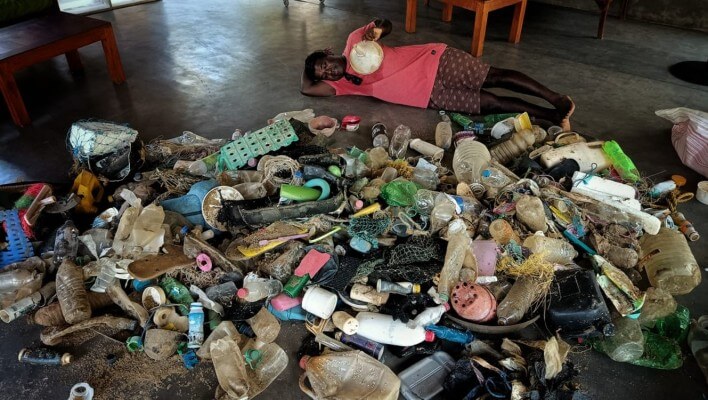
Waste found on the beaches that are being used as art
But there is an uncomfortable reality: cleaning beaches does not solve the problem if there is nowhere appropriate for the collected waste to go. In some situations, waste has to be buried because proper recovery and disposal systems are unavailable.
This is not a sustainable solution.
Businesses and individuals have a responsibility to reduce consumption and manage their own waste, but the scale of the problem requires much broader action. We need effective collection systems, sorting facilities, recycling infrastructure, responsible industry practices and stronger public policy.
Environmental responsibility cannot rest on beach clean-ups alone.
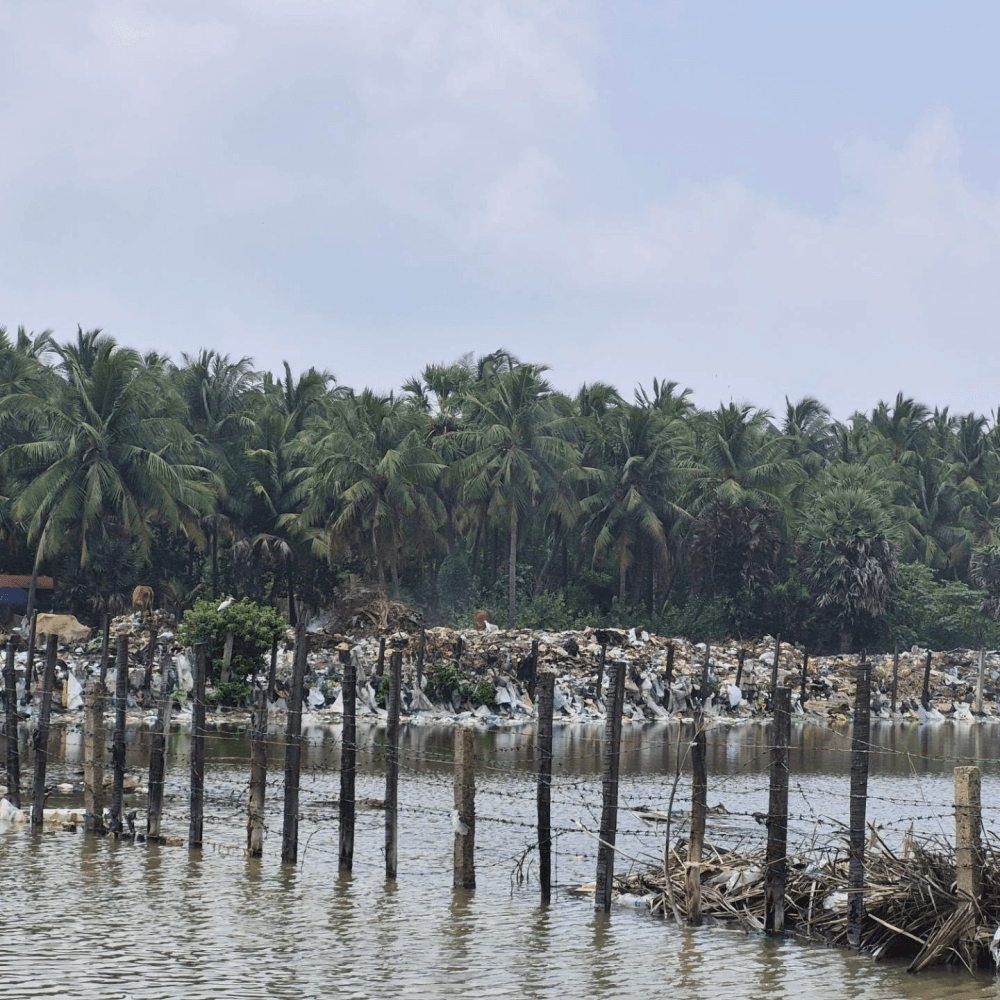
Waste piling up, its is Sri Lanka’s biggest issue. Waste Management
Creating opportunities beyond the usual tourism products
We also believe that some of the most interesting opportunities in tourism are found beyond accommodation and conventional activities.
Local knowledge, traditional fishing practices, food, crafts, nature and culture can all become meaningful visitor experiences when developed respectfully with the people who hold that knowledge.
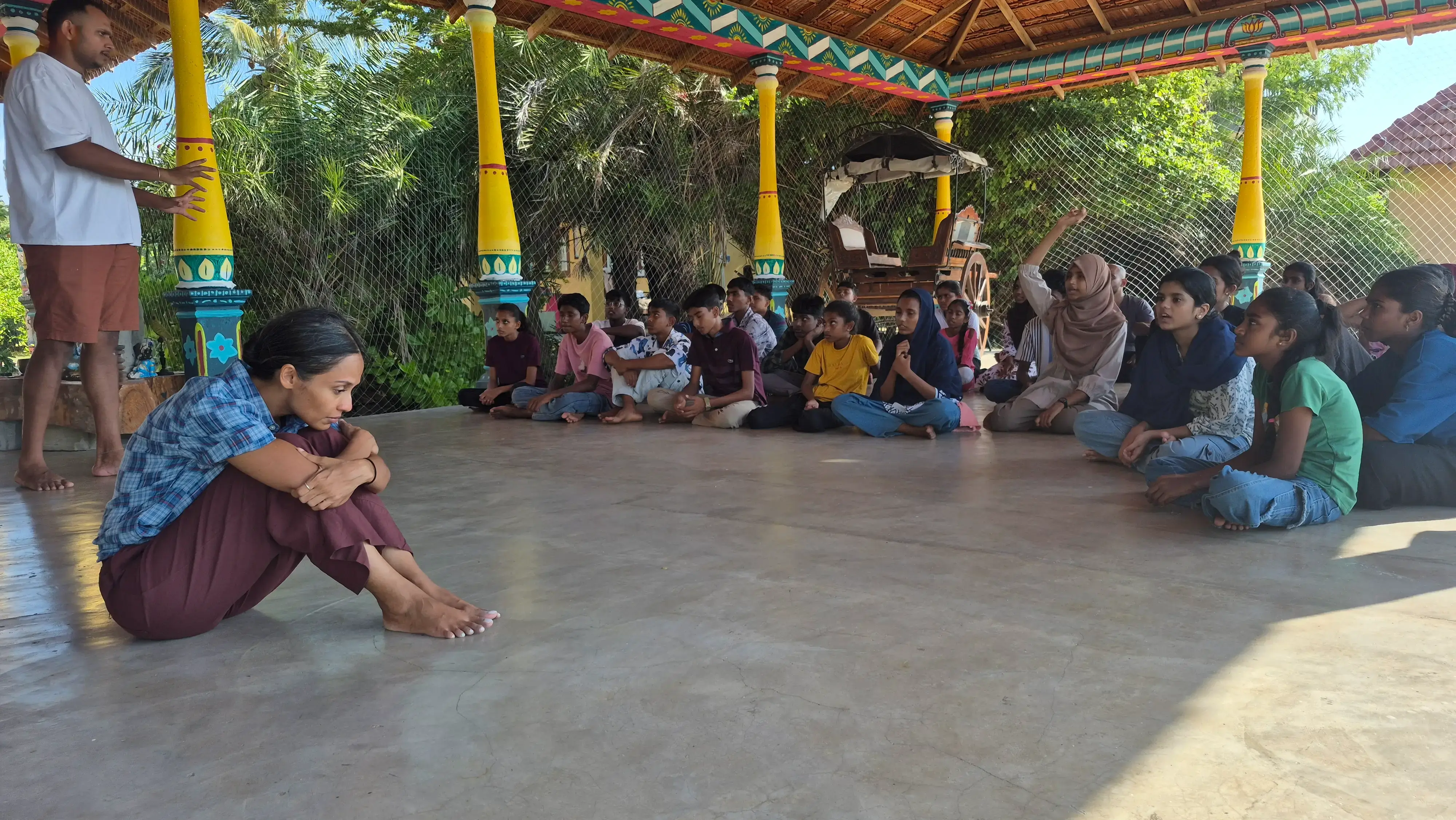
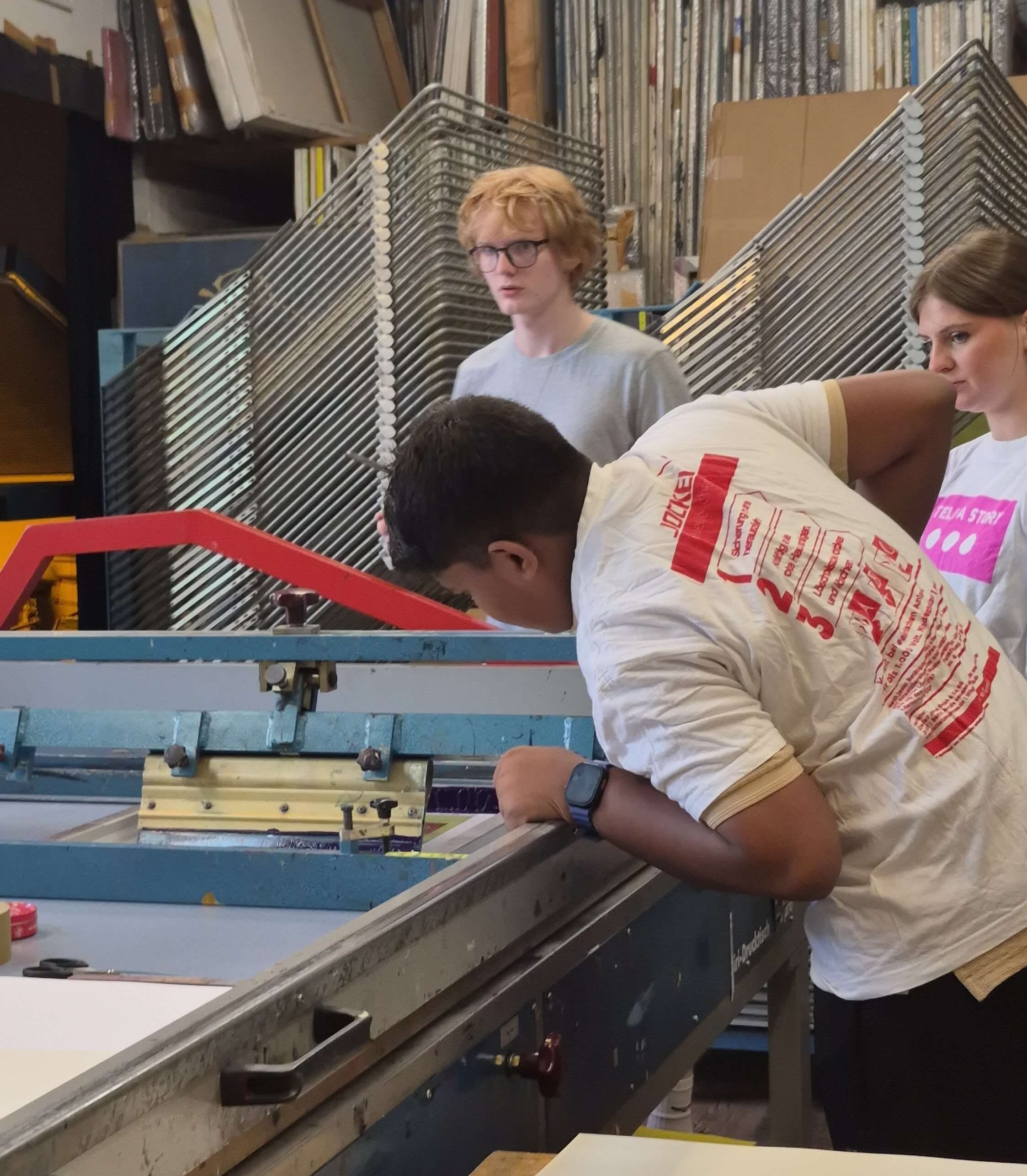
Through initiatives such as our Berlin–Kalpitiya youth exchange, we have also seen the value of bringing people from different backgrounds together. These exchanges create opportunities for young people to experience different cultures, share perspectives and see their own communities in new ways.
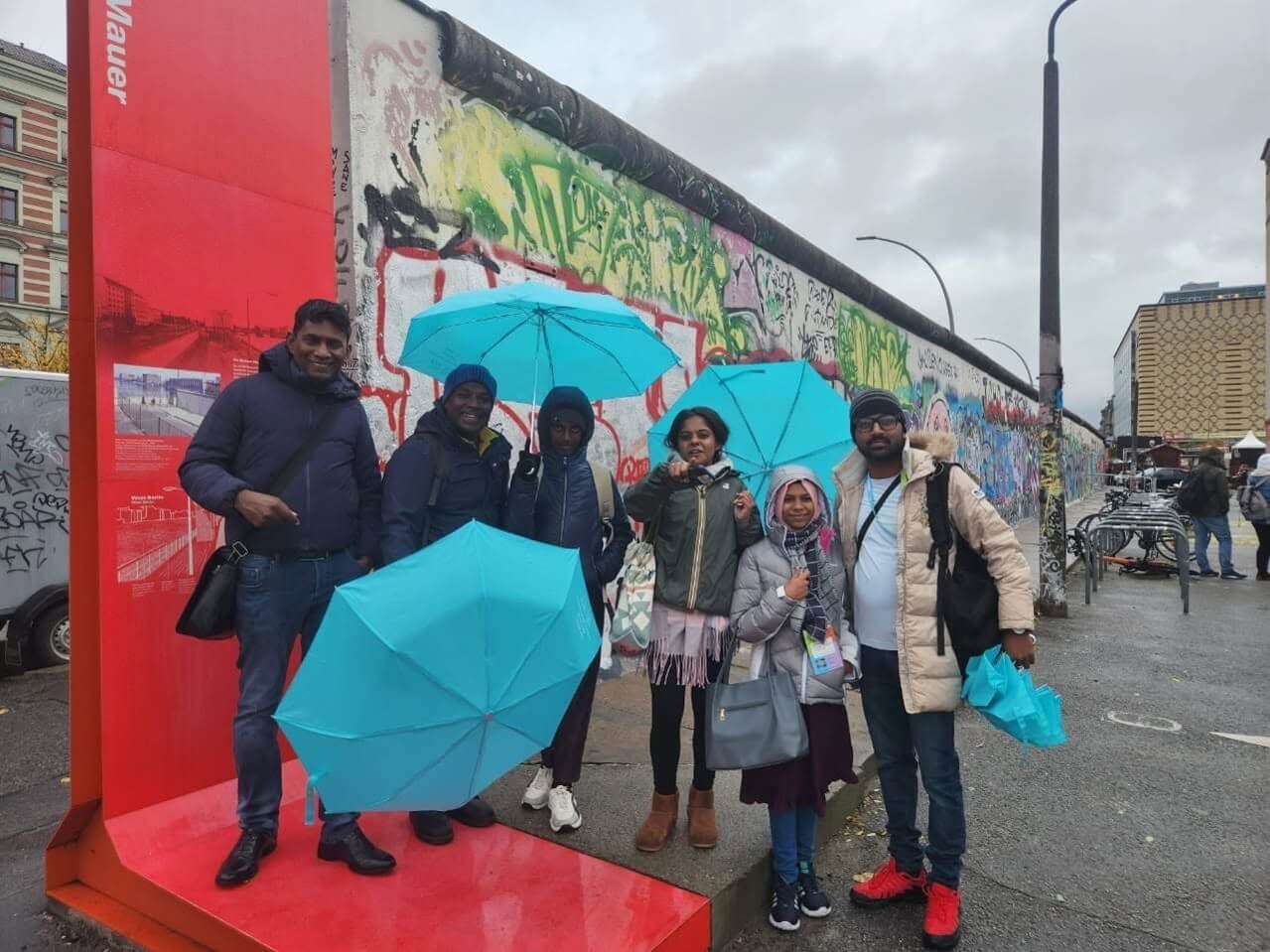
From Kalpitiya to the Berlin Wall – One of the many local students who were part of the Inter Municipality Partnership Project b
Tourism can be a platform for learning, creativity and enterprise, not just a transaction between a visitor and a hotel.
We cannot do it alone
After more than 15 years in Kalpitiya, we know that there are many things we still haven’t solved.
Climate change, coastal erosion, biodiversity loss and waste management are challenges that extend far beyond the capacity of an individual tourism business.
We need businesses, communities, local authorities, government agencies and visitors to work together. We also need to recognise that growth is not automatically progress. We must consider what is being lost, who benefits and whether the natural systems that support tourism can continue to thrive.
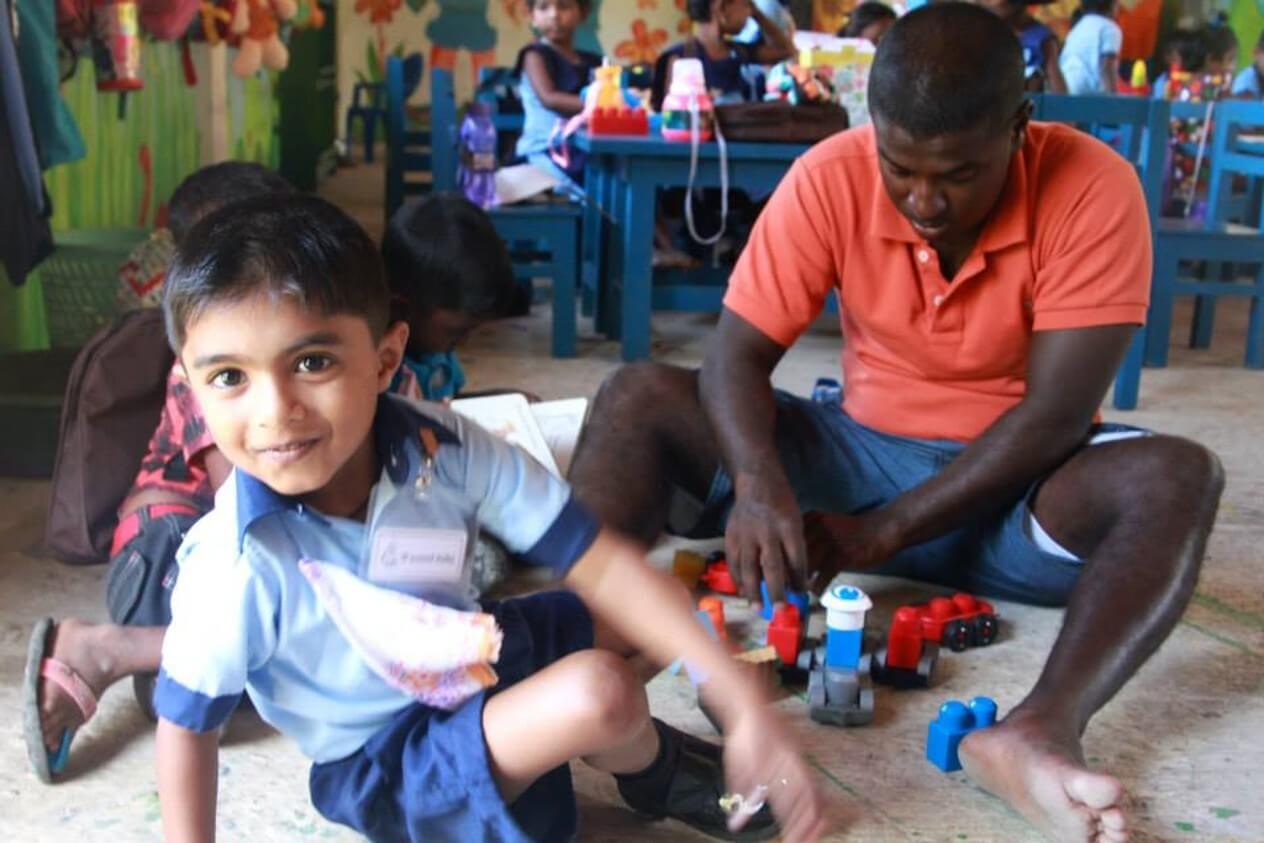
Everyone can be a HERO
At Kitesurfing Lanka, we are still learning and adapting. Some initiatives have grown, others have faced challenges, and many opportunities are still waiting to be explored.
Perhaps the most important lesson is that you don’t need to have everything figured out before you begin.
Start with what you have. Work with the people around you. Recognise the opportunities that already exist. Be willing to share the benefits.
We can all be heroes in our own way — not by doing everything ourselves, but by contributing to something bigger than ourselves.
The future of tourism will depend not only on the places we invite people to visit, but on how well we look after those places and the people who call them home.
At Kitesurfen Lanka, this is the journey we continue to be part of.