Défiler pour explorer

mercredi septembre 30, 2026
Articles sur le kitesurf
The Plants Dil Couldn’t Leave Behind: How the Garden at KSL Grew
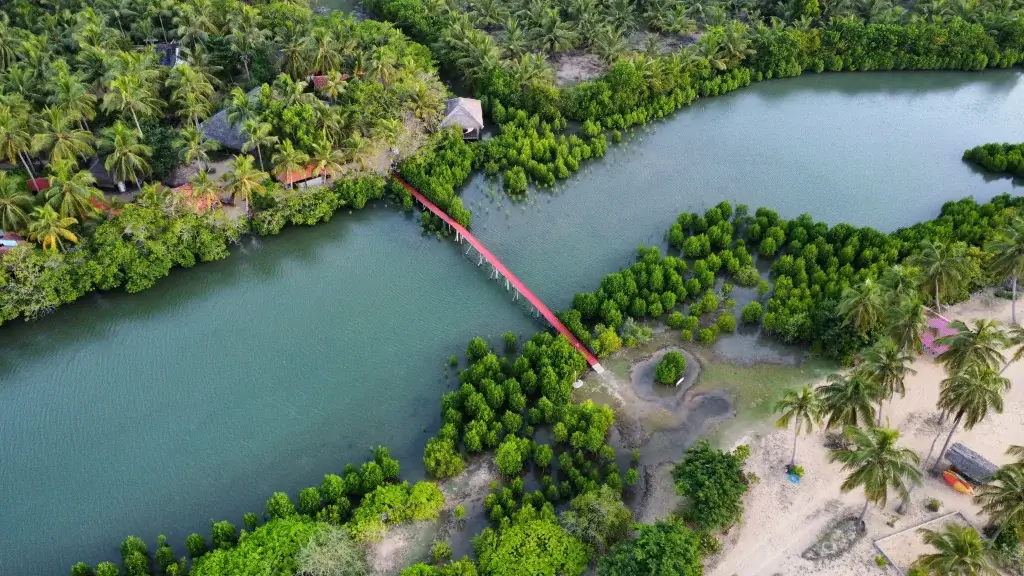
KSL today, surrounded by the garden and mangroves that have grown around the property.
Around two months ago, co-owner Dil was driving through Sri Lanka, about 100 kilometres from KSL, when he spotted some discarded plants beside the road. He stopped, loaded them into his truck and brought them back to Kalpitiya. This happens quite often.
From the beginning, Dil and KSL co-owner Leo shared the idea that the camp should remain green and that as many of the existing trees as possible should be kept. Dil is the gardener of the two. Over the years, he has kept adding plants wherever he finds them – sometimes in fairly unconventional ways.
Plants have arrived at Kitesurfing Lanka from roadsides, gardens and homes around Sri Lanka. Dil once found a discarded cycad plant in Colombo. In the early days of KSL, he and team member Thilak would drive around looking for plants, sometimes stopping at houses to ask whether they could buy one or take a few branches from an Araliya tree.
“I just see plants thrown away and my heart hurts,” Dil says. “I want to give them a new home where they will be loved and admired.”
Many of those plants are still growing around KSL today. Together with the trees that were already here, native planting and the mangroves along the edge of the property, they have gradually changed the landscape around our camp in Kalpitiya.
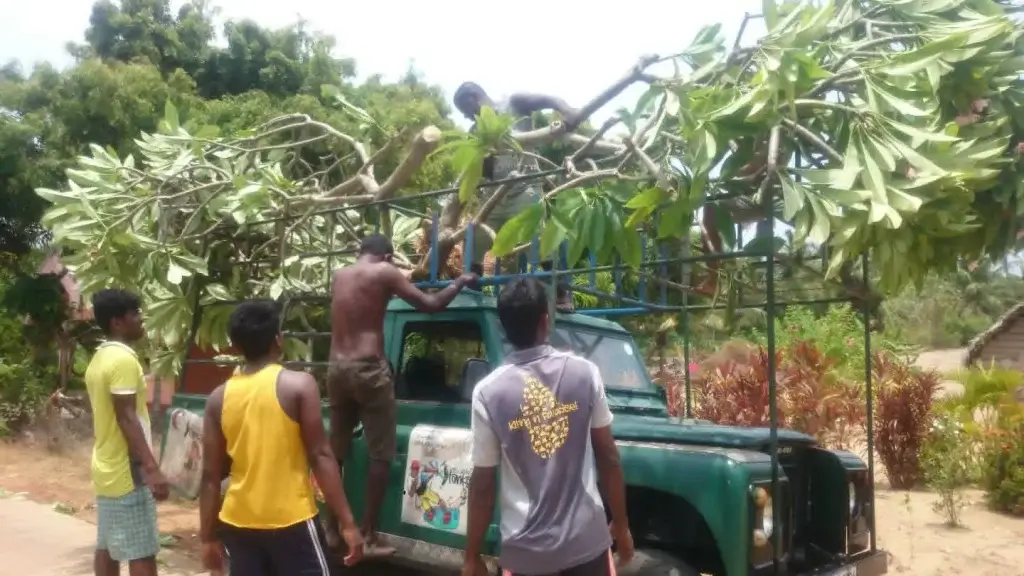
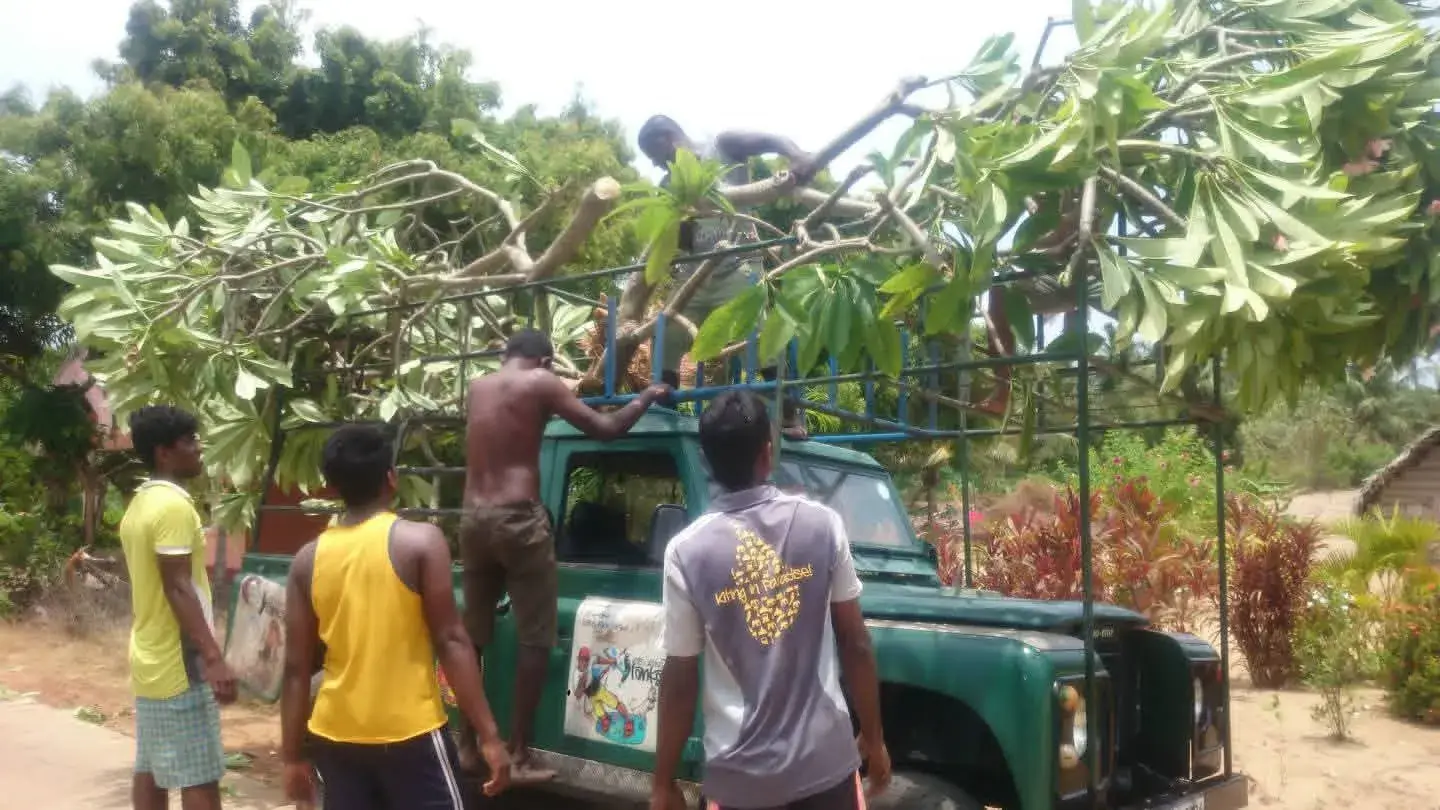
Another rescued tree being loaded for the journey to KSL.
From 225 coconut trees to a garden
When Dil and Leo first took over the property, it was a coconut plantation with 225 coconut trees. They decided to keep as many of the existing trees as they could and build around them instead. It explains some of the slightly unusual details around KSL today, including trees growing through parts of the buildings.
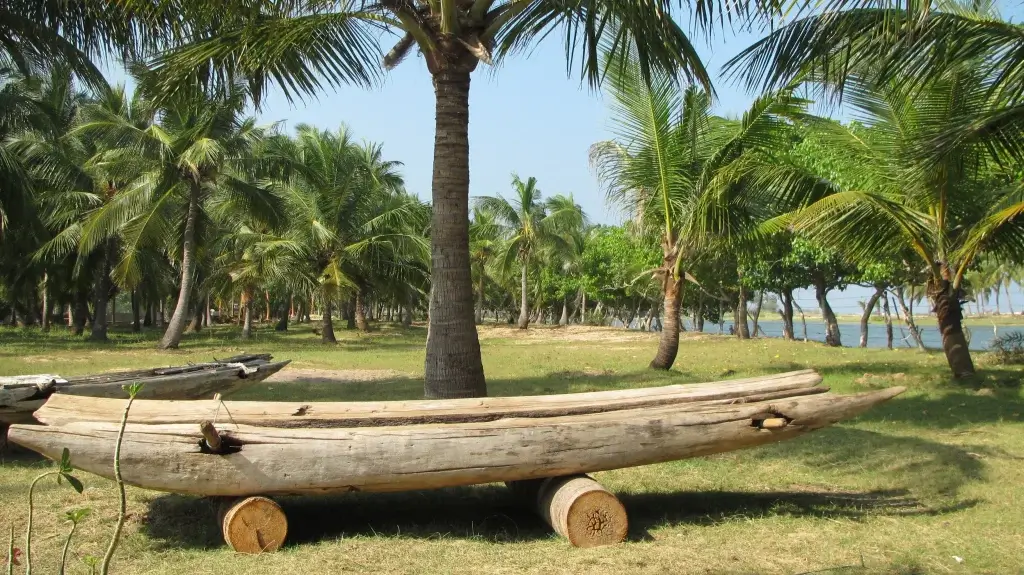
The area where the Sunset Bar & Restaurant stands today, before much of the present vegetation had grown.
“We love plants and trees. It’s part of our being,” Dil says. He and his father started bringing their “extra plants” from the family home in Mount Lavinia to Kalpitiya. More plants followed, collected locally or found during Dil’s drives around the country. Gradually, the fairly open coconut plantation began to change. Dil remembers being able to see the beach and the sunset from the main gate. Today, there is so much vegetation that even while crossing the bridge, much of that view has disappeared. He prefers the green.
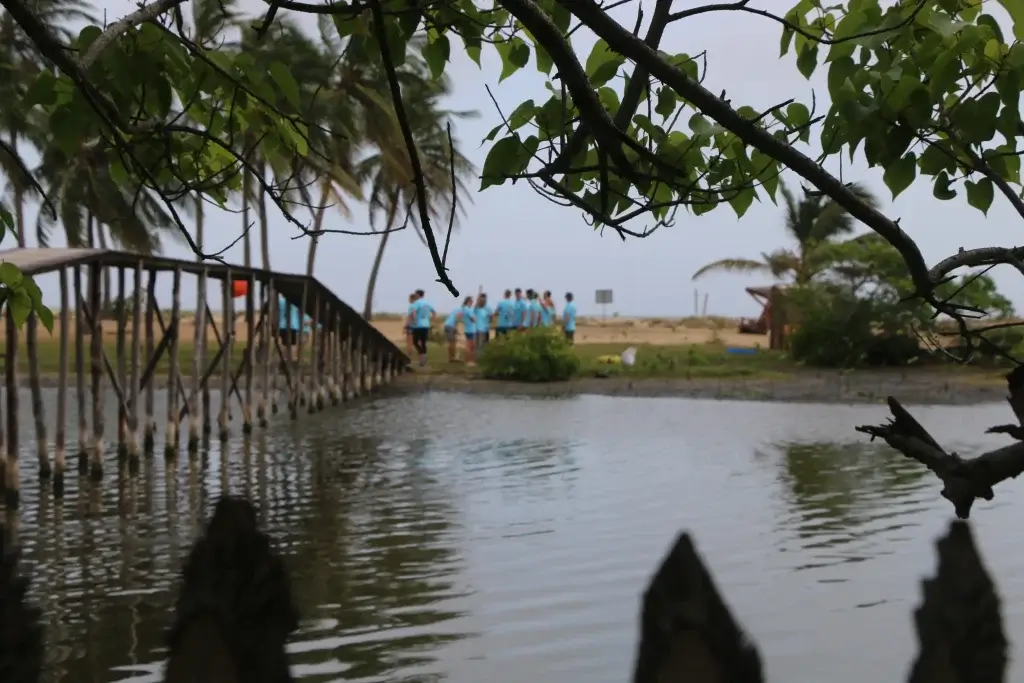
The bridge and lagoon before the mangroves became established.
Learning what grows in Kalpitiya
Growing a garden in Kalpitiya involves plenty of trial and error. Water is one of the biggest challenges. By August and September, the ground can be parched and leaves begin to wither. Then the rains arrive in October and the garden changes again. Dil’s favourite months are February, March and April, when he says more than 100 types of flowers can be blooming around the property.
Over time, he started paying closer attention to the plants already thriving in Kalpitiya and elsewhere in Sri Lanka’s dry zone. Kumbuk (Terminalia arjuna), ebony, teak and mahogany are among the trees growing around KSL, alongside Araliya, or frangipani. In other places, plants are simply allowed to establish themselves.
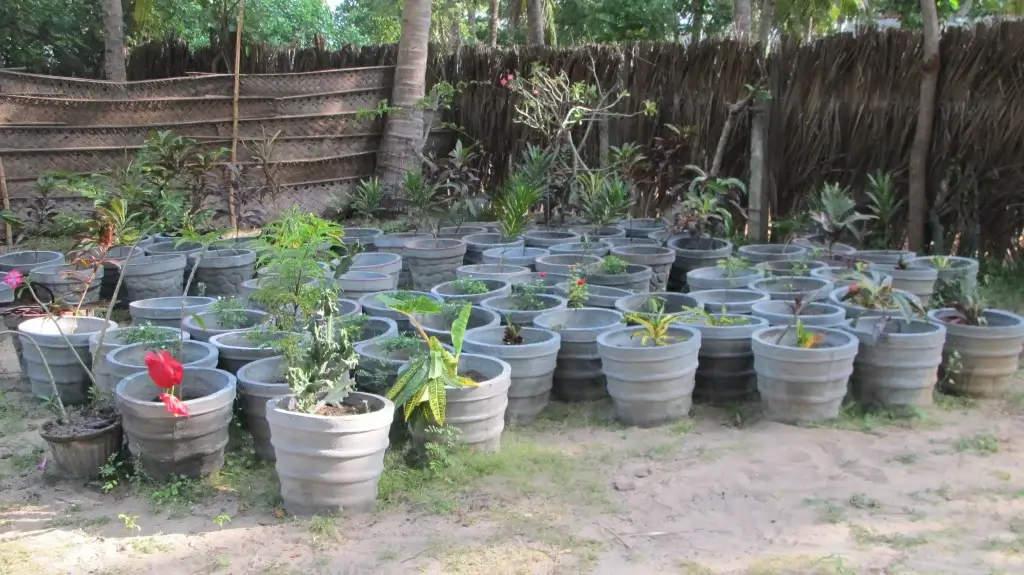
A collection of rescued plants waiting to find a place around KSL.
One plant Dil is particularly protective of is Maha Rawana Revula (Spinifex littoreus), a coastal grass that grows naturally along Sri Lanka’s shoreline. Its spreading growth helps trap sand and stabilise coastal dunes. It is also exactly the sort of vegetation that can disappear when a beach is cleared to make it look tidier. Dil refuses to remove it from the KSL shoreline. Over the years, he has watched the beach in front of KSL change and believes that leaving the natural beach vegetation alone has helped the dunes build rather than retreat. “Nature honours those who honour it,” he says.
A tree for Matt
Not every plant at KSL arrived simply because Dil found an empty corner for it. Some carry stories that most guests walking past them would never know. The Araliya tree in front of the main restaurant is one of them.
Matt Pelly was a regular guest who became a close friend of KSL. Dil remembers the laughs they had together and how Matt, a filmmaker, eventually started recording him. KSL had become a home for Matt.
A few years ago, Dil received the news that Matt had died. Around the same time, while driving through Kalpitiya, he came across a discarded Araliya tree. He picked it up, brought it back to KSL and planted it in front of the restaurant in Matt’s memory. The story made its way to England and was shared at Matt’s memorial. Years later, Dil started chatting to a guest at camp. She mentioned that her brother used to come to KSL. When Dil asked who he was, she told him it was Matt. The guest was Matt’s sister, Claire. Dil took her to the tree he had planted for her brother. Later, when Dil visited England, he went to Matt’s apartment and he and Claire raised a glass to him in the garden.
The Araliya still grows in front of the restaurant.
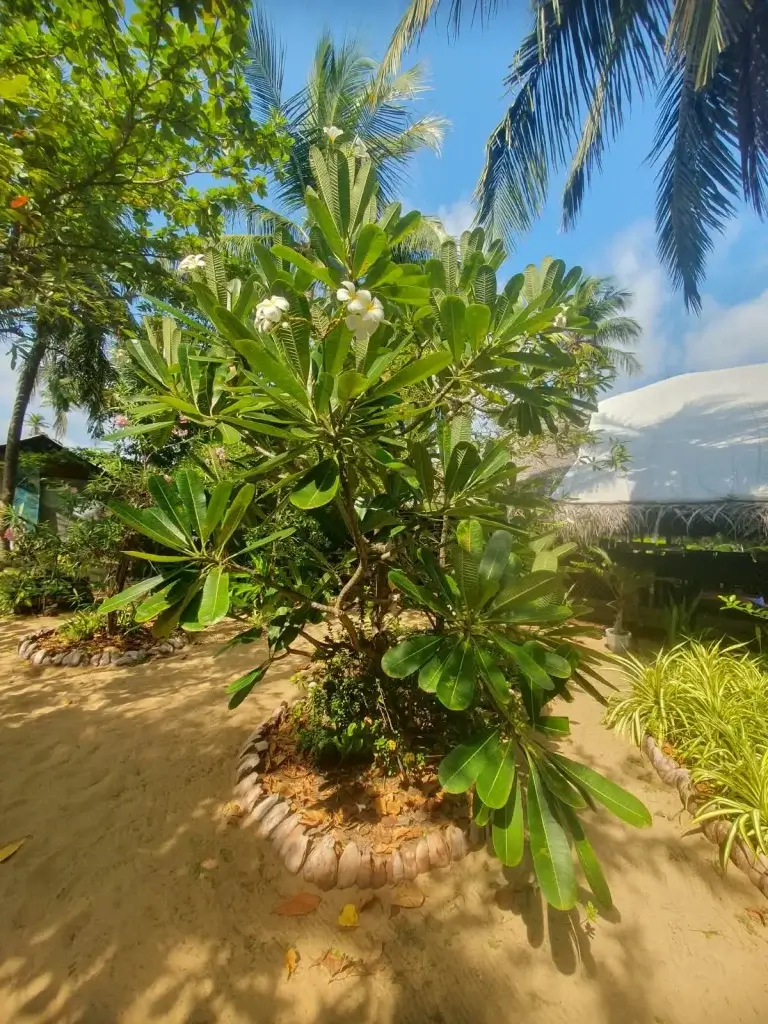
The Araliya tree planted in Matt’s memory beside the main restaurant.
A garden shared between generations
Dil’s father Gihan has been part of the garden almost from the beginning. Dil estimates that well over 1000 of the plants growing around KSL today were planted with his father’s involvement. He usually comes to Kalpitiya during the low-wind season. With fewer demands around camp, he gets the KSL team involved in the garden: pruning trees, fertilising plants and, occasionally, collecting cow dung. There is always something he finds for them to do.
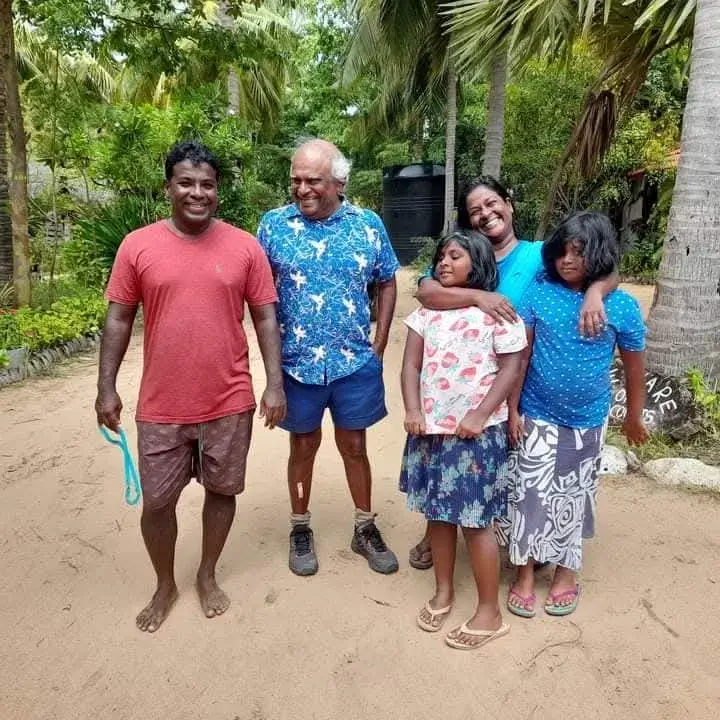
From right to left: Dil, his father Gihan, his sister and his nieces in the KSL garden
For Dil, his father’s connection to KSL goes much further than the plants. “Many don’t realise it was his wisdom and sacrifice that paved the way for KSL to happen,” he says. His father retired to take care of Dil and his sister when they were young. Now, decades later, many of the trees he helped plant are part of the everyday landscape of KSL. Dil sees the garden as part of the legacy his father will leave in Kalpitiya.
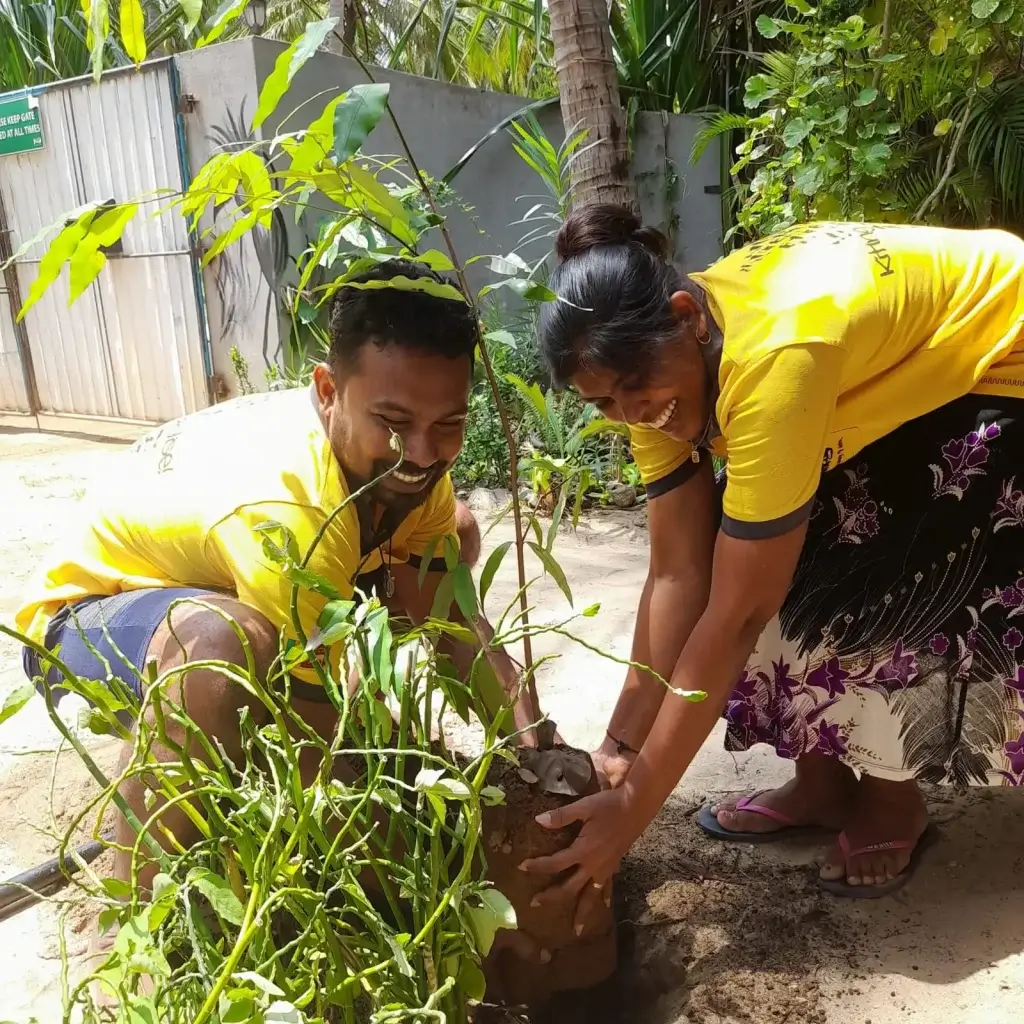
KSL team members planting one of the rescued trees around the property.
A garden without a master plan
Ask Dil how much of the garden was deliberately designed and the answer is: not that much. It has evolved. Dil notices an area, has an idea and, when there is time and the right people around, something happens. At one point, this involved bringing large boulders onto the property. “I love rocks!” he says.
There are influences behind it, though. Dil has long been drawn to two Sri Lankan gardens in particular: Brief Garden in Bentota, the former home of artist and landscape designer Bevis Bawa, and Diyabubula, the home and garden created by artist Laki Senanayake. Both became places where gardens, art and creative life existed together, something that has influenced how Dil thinks about KSL and the Kommune.
More recently, his friend and artist Channa Ekanayake has encouraged him to move even further away from the idea of a European-style manicured garden. At KSL, that means allowing plants to grow more naturally and leaving space for birds, bees, insects and other animals rather than trying to control every corner. The result is a garden that keeps changing.
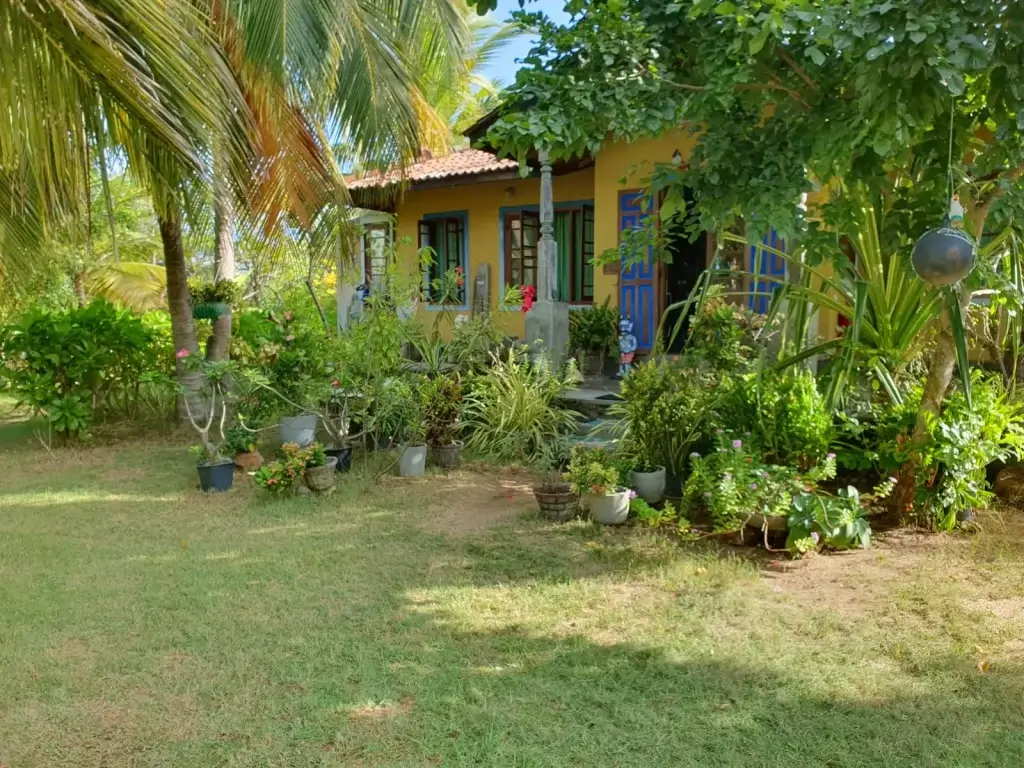
Dil’s home at KSL, surrounded by some of his many “plant refugees”.
The animals noticed too
As the vegetation grew, more animals began appearing around the property. Mongooses and hares move through the garden, owls turn up in the trees, and Dil keeps an eye on two harmless vine snakes living at KSL. He also knows where the garden lizards tend to perch. There have even been reports of a fishing cat around the property.
Some are easy to miss unless you spend enough time here. But after years of planting and leaving parts of the garden to grow more naturally, KSL is now shared with far more than the people staying here.
Growing mangroves in Kalpitiya, one seed at a time
Then there are the mangroves. “The mangrove story is a book in the making,” Dil says.
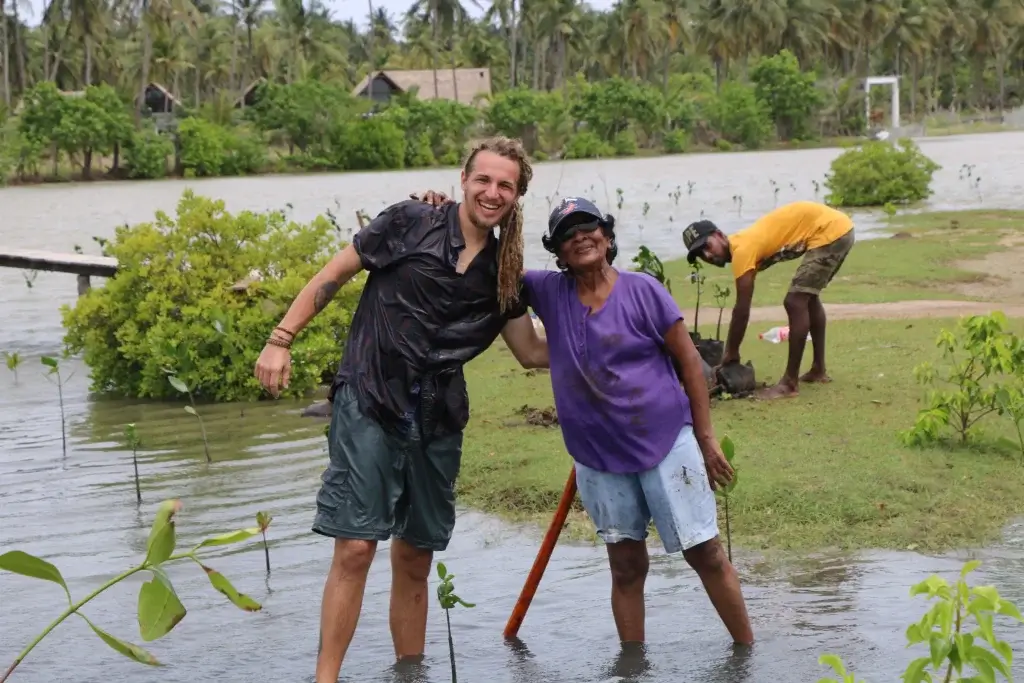
On the right, Dil’s mother Noeline helping to plant mangroves at KSL.
It began with his father planting a few seeds. Dil and the team later started collecting mangrove seeds that washed up on the beach and planting those too. Over time, Dil connected with Sri Lanka’s Coast Conservation Department, which helped source more planting material, and what had started with a handful of seeds gradually became a larger project. Guests joined in. So did visiting groups, including members of the Royal Air Force Regiment from the UK. Today, some of those mangroves are mature enough to produce their own seeds, which Dil collects and plants elsewhere.
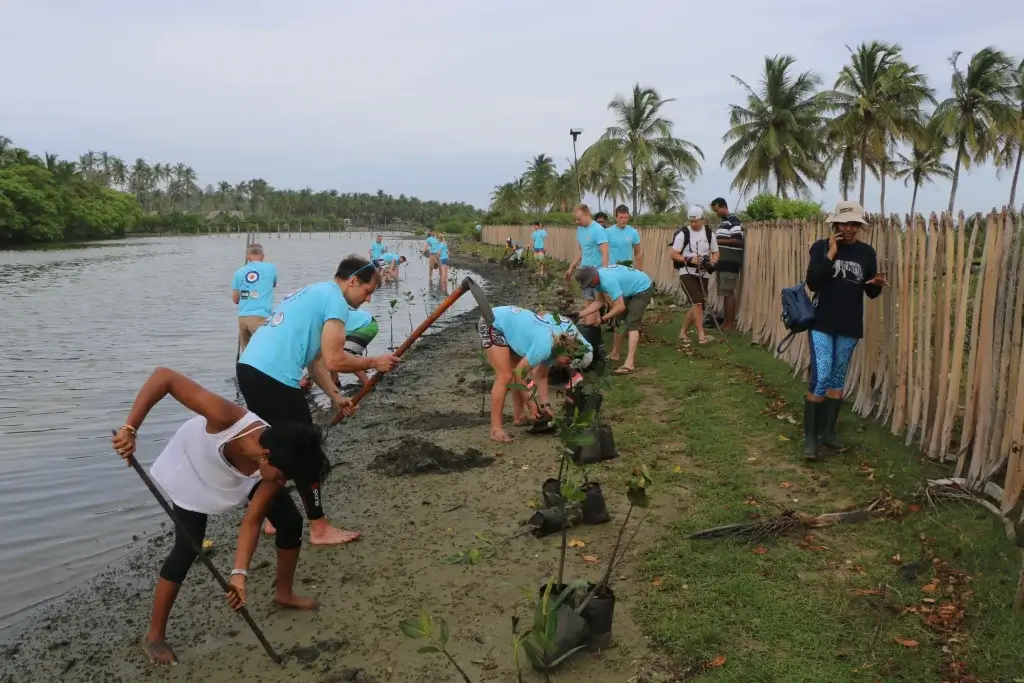
Guests, team members and visiting groups planting mangroves along the lagoon at KSL.
Their role became particularly clear during the major cyclone that hit Sri Lanka last year. From Dil’s perspective at KSL, the mature mangroves helped shield the camp from some of the strongest winds. There is a more personal story among those trees too. Dil’s mother Noeline helped plant some of the mangroves. After she died, he scattered a symbolic amount of her ashes among the same mangroves she had helped establish.
Still planting
There is no finished version of the KSL garden. This winter, Dil wants to remove some invasive species and replace them with native trees. He has also started collecting seeds from Palmyrah palms and planting them around the property. And he still stops when he sees a plant that needs somewhere to go. Some come from Colombo. Some come from neighbouring gardens. Some have travelled from the family home in Mount Lavinia. Others were sitting beside a road when Dil happened to drive past.
The next one might already be in the back of his truck.
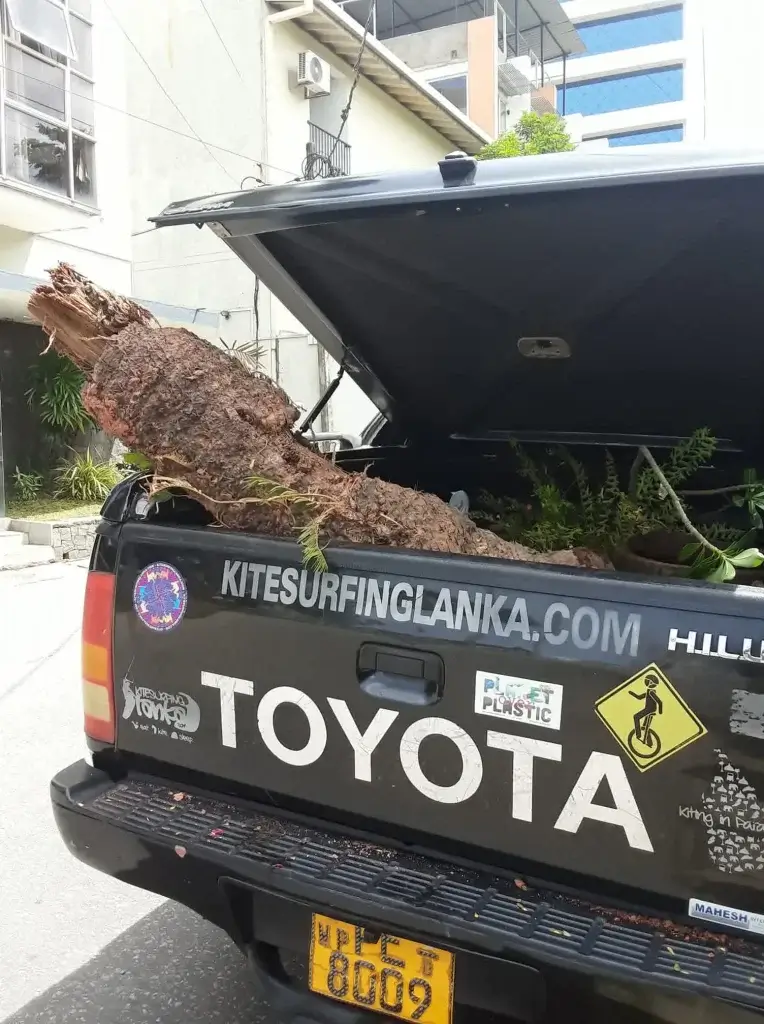
The latest plant find loaded onto the pick-up, ready for the journey to Kalpitiya.