Scroll naar Verkennen

dinsdag oktober 13, 2026
Kitesurf artikelen
When Cleaning the Beach Isn’t Enough: Kalpitiya Students Explore Plastic Waste Through Theatre
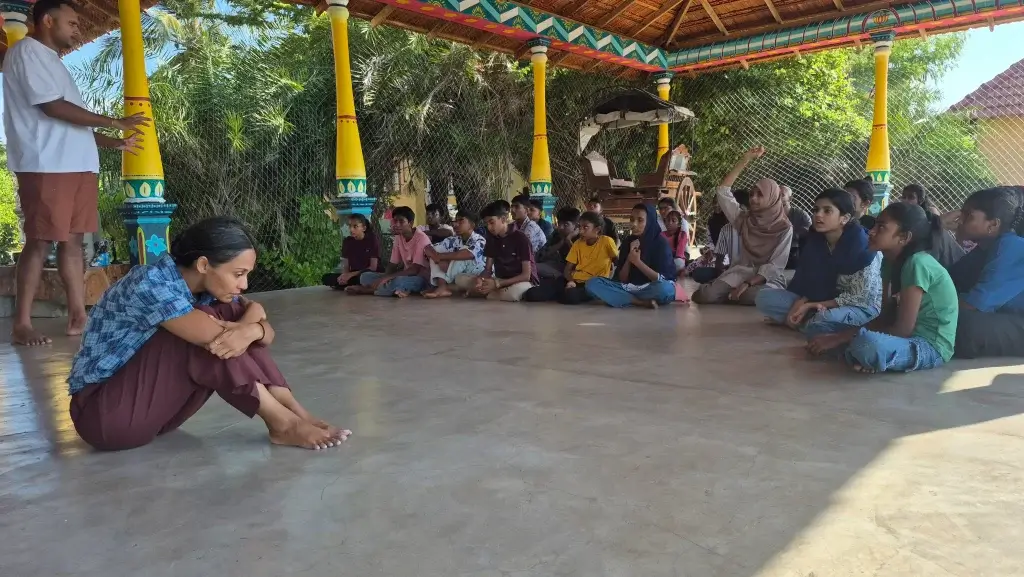
Students from six Kalpitiya schools spent six days using theatre to explore ocean health and plastic waste.
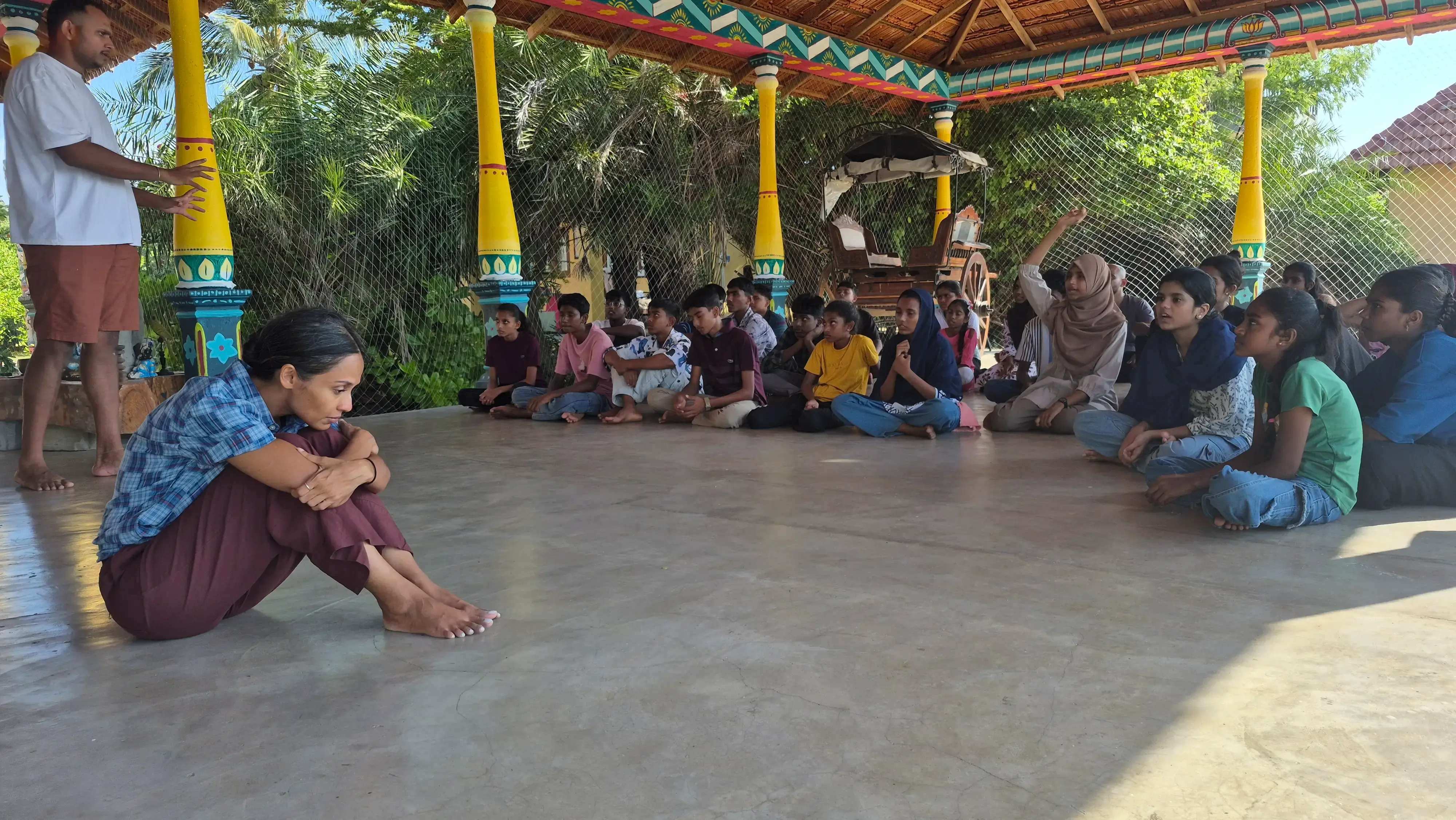
From 11–16 September 2026, 30 students from six schools around Kalpitiya came together at Kitesurfing Lanka for a six-day environmental theatre workshop exploring ocean health and plastic waste.
The students, aged 13 to 15, were all members of Sustainability Clubs at the participating schools. Working with facilitators Lihan Mendis, Tracy Jayasinghe and Vijayanathan Thusandra, they used theatre, movement, voice exercises and group discussions to examine a problem they encounter regularly along the Kalpitiya coast.
Starting with everyday life in Kalpitiya
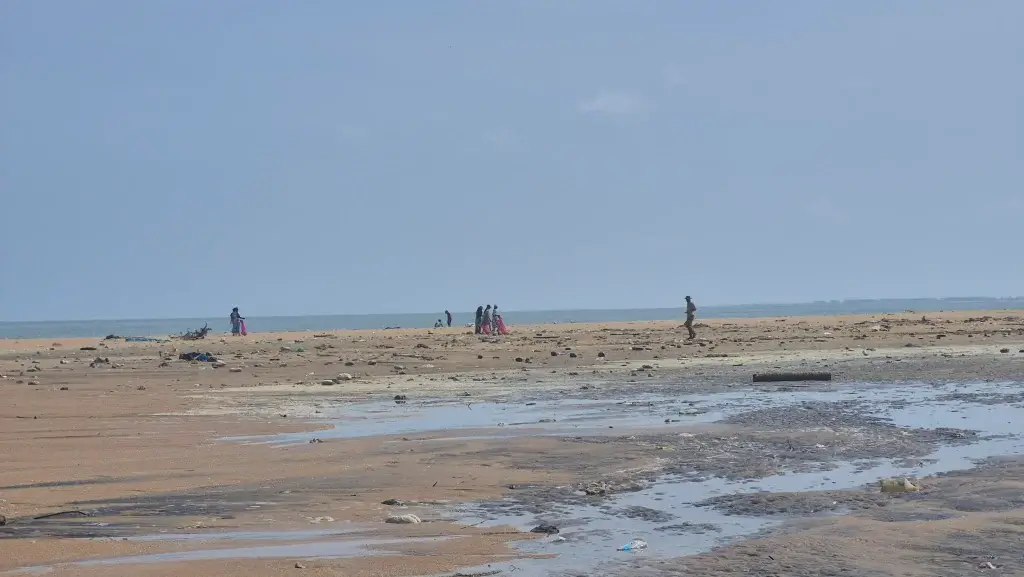
Plastic waste on the Kalpitiya coast – a problem the students knew well from their own experiences.
The workshop began with the students’ own experiences rather than lectures about environmental science. They talked about the beaches they know, how rubbish is dealt with at home and what happens when there is no reliable way to dispose of it.
One observation was shared across the group: none of the 30 students could remember seeing a local beach that was genuinely free of rubbish. Memories of birthdays and afternoons by the sea often included clearing bottles, wrappers and other waste before finding a clean place to sit.
The students also discussed some of the practical reasons behind the problem. In parts of the peninsula, regular waste collection and community bins are limited. Burning, burying or leaving household waste has long been used as a way of dealing with organic material, but those same methods have very different consequences when the waste consists of modern plastics.
These conversations became the material for the performance the students would develop over the following days.
Six schools, one production
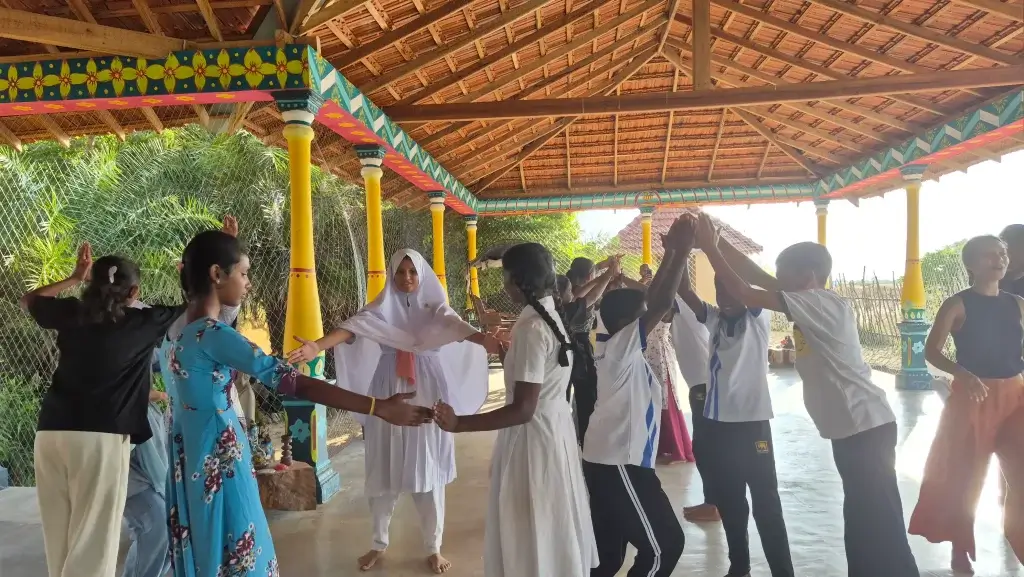
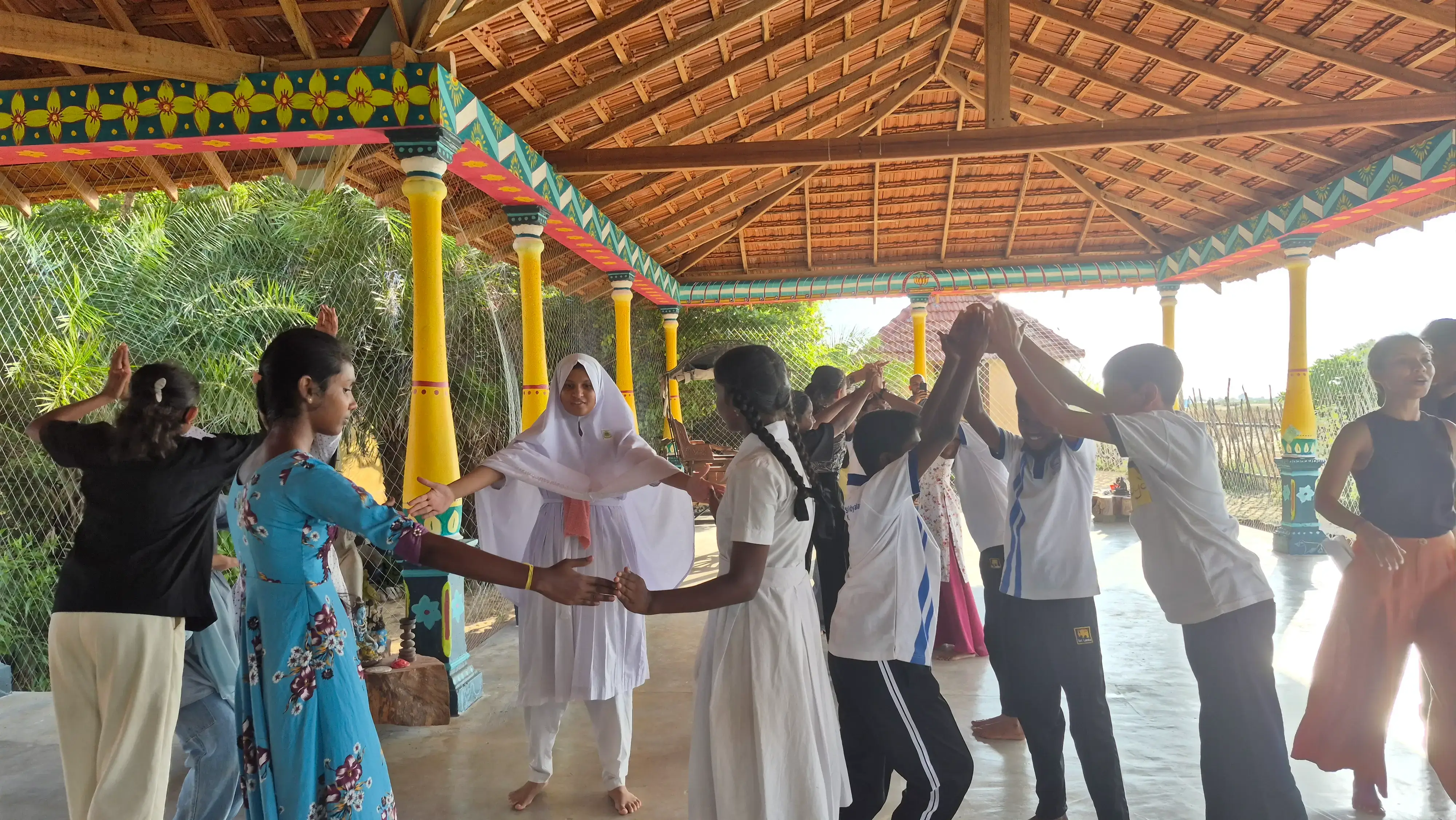
Movement, voice exercises and improvisation helped students from different schools develop the performance together.
The students were deliberately mixed into groups with participants from other schools. The first three days were spent on physical theatre, movement, voice exercises and improvisation. This gave them time to get comfortable working together and speaking in front of one another before they began developing the final production.
On days four and five, the focus shifted towards writing scenes. The students drew on their discussions and their own experiences of Kalpitiya’s beaches to decide what they wanted the performance to address.
The story they created centred on a group of friends preparing a surprise birthday gathering at the beach. They bring food wrapped in banana leaves, homemade drinks in reusable glass bottles and their own cups. Wanting a clean place for the celebration, they visit the beach the day before and collect the rubbish they find there.
When they return for the party the following day, the beach is covered in litter again. They clean it for a second time and have their celebration. At the end, however, they are left standing beside the pile of waste they have collected.
Cleaning the beach has not answered the next question: what should they actually do with all that plastic?
Taking the question to the audience
The final performance took place on 16 September in front of parents, teachers, principals, community representatives and other participants.
Rather than writing a solution into the final scene, the students asked the audience what they thought should happen to the collected waste. Suggestions included reusing it, burning it or burying it. The students responded to each idea with questions based on what they had discussed during the week.
If some of the plastic could be reused, what should happen to everything that could not? If it was burned, what happened to the fumes? If it was buried, what happened to the plastic in the soil and water?
The exchange moved the discussion beyond the familiar message that people should simply stop littering or organise more beach clean-ups. The students had spent the week looking at the wider problem: individual choices matter, but so do waste collection, infrastructure, education and the amount of disposable plastic entering everyday life.
What comes next
The workshop was organised by the Town Council of Charlottenburg-Wilmersdorf in Berlin and Kalpitiya Pradeshiya Sabha, in collaboration with the Goethe-Institut Colombo and the Kalpitiya Education Department. The 30 participants will take what they worked on during the week back to the Sustainability Clubs at their respective schools.
One possible next step comes directly from the discussion during the final performance. Project partners plan to bring youth representatives and local authorities together to look at the possibility of accessible community drop-off points for recyclable waste in Kalpitiya. The students’ participation during the workshop will also help inform future youth workshops and international exchange opportunities.
For KSL, hosting the workshop connects with environmental and community work already taking place around the property, including beach clean-ups, efforts to reduce single-use plastics and longer-term environmental education projects.
The six days also showed why local knowledge matters in conversations about sustainability. The students did not need to be told that plastic waste is a problem on Kalpitiya’s beaches. They already knew that from growing up here. The workshop gave them a different way to examine why the problem persists, discuss it with students from other schools and put those questions in front of a wider audience.